CAPTION
Welcome everybody to the E X P series here at UN 10 10 dot com For all new listeners inour E X P series we share leadership and career experiences from successful leaders around the world So E XP stands for experience My name is Udon Newman I'm the founder and chief experience officer at UN 10I N banking to a founder in Digital Health I welcome a good friend of mine Alexandra Reiff Alexander wasthe cio and global head of tech technology for years in different banks in the United Arab Emiratesand is now the founder of Digital Health So what makes Alex very unique is his energy andpassion to transform business models and organizations He did that in Europe in Asia and in the Middle East AndI'm looking forward to hear from him how he did that What are his challenges and what were opportunities aroundhis career in these different kind of regions of the world So welcome Alex and thankyou for being my guest It's great to have you on the E X P series And I'msure our listeners will also get a lot of positive feedback out of your experience Thank you And let's getin it Hi Thanks for inviting me to be part of your podcast and happy to share some insights experienceknowledge uh from my past and from my presence and looking forward to a fewchallenging questions from you Let's get into the question Alex Um Your career is a tripfrom Stuttgart to Beijing to Abu Dhabi and to Dubai And these are only uh some sometop names of cities they were for sure more around that So a lot of people me includedhave international careers But I must say yours is a special selection of countries and challenges And I remember someof your career steps when we work closely together But please for our listeners share your bio andmore important where your decision points on your career are and what are the different challenging milestones onyour career path You mentioned a few of my stations as you said where I have been and it's you'vemainly focused out around the locations I'll try and extend that a bit And before I go intomy bio the locations were only one part Usually the other part was always thelocation the culture the business culture in that location and then the company the company culture ofthe company that I was working for in these locations And I think that's uh was very oftenfor me decision points Um where I where I took the decision to move somewhereNow very often I got offered something uh sometimes I declined sometimes I accepted But before goingalso into the bayou you said what are your drivers and decision points For me I think the mainthing that always drives me and that's probably not the same for everybody But for me Iput that even on my linkedin profile as a quote from Albert Einstein which says I'm neither veryclever nor especially gifted I'm only very very curious and a similar thing is for me right I I wasnever good at school I was just average everywhere Um I'm not very gifted in anything The onlything I have is a drive and a curiosity I always want to know more things want to learn differentthings want to expand my knowledge my experience And then usually when a decision point came or whensomething came um it was either an offer that came from somewhere and then I had to decideyou know in the current position or in the current assignment Am I still progressing Am I still satisfying mycuriosity or am I not Or do I agree with the direction that was basically brought tome Uh Can I identify myself with that or not And then usually you start to rethink and uhyou you start to rethink whether you know is it still the progress I want to make isit the direction I want to go to And that's kind of always the decision pointsand the drivers and that has never changed over the last many years going back into um bio or wheredoes all of that come from or how did I end up doing that I mean originally Istudied electrical engineering in Germany Graduated as a master's in what was at that time whatdo you call digital at that time which was kind of the technical part of computer science And that wentdown to really you know switching switching flip flops and um basically programming F GPAS and all that stuff really the the hardcore bit of computer science and all of that was inthe last millennium So at the very early stages of this whole thing now after graduating and after basicallybeing in the job um being uh taken over by the company for whom I did my final thesisI realized that you know developing hardware and writing low level software was interesting but was not going to cutit for me for the whole life So I went back to university and did kindof the German equivalent of an M B A which we call engineer I did half of that inGermany And as I thought you know there must be something else I did half of that in Singaporewhich was kind of my first real international stint And that was quite interesting to be exposed toa different culture to be exposed to also a different educational environment which was not what Ihad experienced so far studying all my time up to a first degree in Germany So that kind ofgot me very interested to see Oops there's more out there and there's much more to learn there's muchmore to experience and it's not only the content of your job your education there's a lot around this whichis cultural which is business practices which is different behaviors And I sometimes as I say I somehow as Isay I I think I leaked blood at that point Then once that was finished I basically applied and Isigned up with uh at that point uh Shell trading and shipping or shell the oil companyBut in their trading arm which was um and in their actually in their I T which was agood combination of my electronics I T skills and uh the M B A slash businessskills I had acquired at least theoretically during my university time So I ended up in London at acompany called Shell Trading They were doing the crude and products trading and I was in the IT there Very interesting for me um first as an I T consultant Then whenthis whole thing again remember we talk about the last millennium when this whole thing with the webstarted I was very keen to get into that to understand that And we developed in-house development In-house developeda few productivity applications stuff you you take for granted today stuff you get off the shelf today with officefor them and then also did some infrastructure work for them on the network levelunderstanding how IP networks work and uh basically rolling out messaging projects Um Again very interestingLots of facets Uh The thing then was I was in their trainee program Butyou know what um there was no real progress anymore and there was no real projection for meanymore What comes next and where to go next So something happened some old friend called meand said look there's this startup here in Germany they're looking for somebody to basically help drivethe development So I left a very safe job and I left a prescribed career and I jumped intothat start up and was doing e-commerce software again very interesting set up there The whole thing thesoftware the whole dream was already sold to a few customers but nothing was reallybuilt or not a lot Let me say it this way and uh somebody had to getthe whole things together that was a very engaged team Um And um a very also knowledgeable and very skilledteam I just needed to be pulling together a bit of architecture which I hadn't come acrossbefore that but a bit of systems architecture uh how to do these things properlyhow to do them in a scalable way So we build software and that was great So I was therefor three years It was running quite well It was a startup I put some money in Unfortunately you knowthere was this external event which they called the dot com bubble burst which hit us unfortunately before thenext f funding round And uh we were not yet cash flow positive We had a goodcash flow but we were not yet cash flow positive And that's when you get in trouble withthe startup Usually uh you're not yet cash flow positive there's not enough money anymore andyou need to then do something So we had to restructure the company It was a very tough way Wehad to downsize things were not going necessarily the trajectory I thought they should be going We built a greatsoftware We had quite a few customers We were running the biggest e-commerce site in Europe on Microsoft basisBut still at the end there came a decision point when um I got anoffer from a company called Daimler slash Mercedes from uh which is when I met UDO basically Andthat sounded actually interesting And um you know so I had to rethink do I want tokeep spending my time in the startup environment Um or do I want to move back intoBig Cop and uh and operate there And at that point I felt I can learn moreby moving back into big corporation Um Plus in all fairness I had two little kids uhyou know you need to bring the money home in order to have the food on thetable So I switched I switched to Daimler at that point and was then under UDO responsible for the clustercentral Europe as a as a cluster C A O uh with quite a few with quitea few group companies there running largely vehicle finance on the retail side and also vehiclefinance a bit on the corporate side for the deal of financing And interesting enough many ofthem had all the same problems They were engaged in some transformation programs they were engaged insome uh system migrations and they were largely how should I say tackled only technically but not organizationally UhThey were very often you know conceptualized purely technically and neglected the whole organizational piece and how toget how to get such a thing implemented or changed Uh Because it's the technical part isjust one part it's an important part and it needs to be done well but it's notthe only part So cut the long story short I ended up going around the Europe uhtrying to basically bring such projects back on track or to run them completely Andsomehow in some cases I was successful in some cases you couldn't fix them And um that wasall very interesting And I kept learning I kept learning system approaches I kept learning different organizations I keptlearning different financial products which I had not come across before And as it is my it as it ismy kind of personal endeavor I want to know not only how do things worktechnically but also how do they work Uh conceptually So I wanted to learn how does a leasing work Howdoes a loan work How does that get calculated How does that get accounted for Howdoes that get amortized How and so on and how does that get serviced Uh how do youinteract with the customer and within this project you know I had lots of umlots of um opportunities to ask people who know how this works So that went on for awhile then uh somebody realized uh that you could send me into some burning platforms And the nextburning platform was Beijing at that point in uh in China where Daimler Le Mercedeswere just building a new financial services company at that point which I think it's becomea bank in the meantime and they needed somebody to basically make sure this thing goes live properly and thenuh it is operational and can be built out uh with further products further systems andso on So we packed the container and went to Beijing with the whole family That was interestingcompletely different culture completely new environment Sure it challenging Yes But you know what I think it wasit was great It was a great experience So that went on for about two yearsUm I was just about to renew my contract for another year because there wasmore things to come on that side that the company was growing like mad and um additional systems for additionalproducts needed to be implemented Uh I enjoyed that very much and then I got another call sayinglook um you just have to go over the water into Japan Um There's a few other there's afew issues with a few of the financial service companies there because there is three and then there is thevehicles import side and the part logistics side So quite a few things need to be done thereCan you please go So I looked at it like Japan it was never in Japan Don't knowthat culture really heard lots of things But uh anyway so again packed the container movedthe family to Japan was there for three years Um doing replacement projects doing refurbishment projectsand doing I think still the only demerger of my career uh where uh Daimler and Chrysler orMercedes and Chrysler basically Dem Meg very interesting exercise Um If you ever get to do one ofthose again for three years doing system replacements and and architecture overhauls landscape overhauls there First time I did virtualizationthere very interesting And with that one got exposed to let me call it what we call cloud todayat least on the technology side So that was quite interesting Uh Then I got called back intoGermany to basically take care of a few things One was the home build um course system uh thatthey were running out of Milton Keynes Plus there was a project going on in Detroit Plusmoving the financial services headquarter from Berlin to Stuttgart and so on and so forth And that wasthen for me a bit how should I say Awkward I didn't know really you know where wasthis going And and um my boss had changed didn't like that guy So youknow then all of a sudden I had hunted ok And and said look there isthis uh actually it was two things happening at the same time I had literally two job offersat the same time which is very rare One was uh to go to London and theother one was to go to this weird place called Abu Dhabi uh where therewas a bank who needed somebody to you know do what I used to do Overhaul the whole thingI then thought you know London I was already uh my son was born there Sowhy not try something new Let's go to Abu Dhabi So we went to Abu Dhabi That was for meprobably one of the bigger challenges because I was all of a sudden not only responsible for um somepart of the banking business but they literally they were a universal bank and they literallyhad everything that you can think of in banking from retail conventional Islamic over smeto corporate banking to um to brokerage to wealth management to private banking you name itthey had it And um the whole thing was pretty pretty pretty um underserved On the I Tside I should say uh I was really surprised what you can on which footprintyou can run a bank So everything needed to be done That was down fromthe data centers from the networks from the server landscape up to the application landscape to thewhole application architecture replacing core systems replacing payment systems building out the channels which were not there before andthen basically ramping them up and putting them onto a footprint so you can run The whole thingwas quite interesting And um that went actually it took me about six years orso to refurbish that whole shop And just at the moment when it would have becomeboring there was another challenge which was you know three banks merging So I went into a threebank merger and uh got the task to kind of get that done on the I T sidewhich again was a very interesting one never done a three way never done such a mergerBut um then just right in the middle of that everything was designed set up was running wasrunning Well actually at that point there was a personal event in my life which wasmy daughter had an offer to basically join the United World College And um well that wouldhave meant for her a change in the location for her last two years inthe diploma program and she was prepared to go to boarding But at the same time I had a fewhealth issues and I had done this for quite a while And so I thought maybe time for achange maybe time to retire Now I I can probably while I talk about thisI can hear UDO laughing in the background Alex and retiring And that was reallymy goal I had to fix a few health issues which I did And together with my daughter andmy wife we then went to to Thailand and you know try to recover health wise Plus umenable my daughter to do her to do her to finish her school there And um I really wantedto opt out but then obviously as it was still within that merger um somebodyneeded to you know finish that So my boss came to me and said you needto find me a solution So basically for the best part of the year I was shuttlingback and forth between Thailand and Abu Dhabi In order to pull this merger over the linewhich we then successfully did we merged the systems and everything worked all well And uhI left then uh like two days or three days after the final merger andafter the final go live of the systems I boarded the plane flew back to Thailand I think I landedone day the next day the airport was locked for over a year due to COVID So I wasI was stranded in Thailand which was actually quite nice You know I fixed my health issues and then thingsstarted to happen I really wanted to retire but uh didn't pan out like this as itwas COVID and as everybody was kind of and now all of a sudden accepting remoteworking um I got quite a few people who called me who were aware that this guy Alexhas nothing to do Um So I got lots of things Can you have alook at this one Can you please check out that one Can you whatever youknow lots of and or I even went into some consulting engagements because nobody wanted you onsite anyway at that point in time So I did a lot of stuff remoteand that's how all of this started I got into some um some startups whowere asking for advice So I and some of them were so interesting that I decided Iwant to even put some money into them So I started what you would call angel investmentfor angel investing for no better word So I started to put money into it put myknowledge into it try to coach a few of these founders And that became reallyinteresting and um that went on until kind of COVID was over until my daughtergraduated And then we decided that probably Thailand is a bit too calm So we came back tothe UAE um still had an apartment in Dubai moved into that one And then again thingsstarted to happen I was very busy with my um startups on the fintech and red side and onthe crypto asset side and all of a sudden another bank here local bank came and said look we're lookingfor somebody who can you know inflict the change of also to say fix up thingsUm So I started with them and uh that was also very interesting Again anotheruniversal bank lots of projects in trouble which needed to be on track Um a landscape which needs overhaula lot of work So that was going on while that happened I met um I met anold friend of mine actually he was the first guy I had ever hired and we compared notes and hehad some ideas and uh how does that uh came a startup So we we we threwour ideas together we threw our concepts together And at the end uh we started a startupwe put quite a lot of money in and uh now I'm running a startup I'm still in the bankas a consultant Uh basically to help them finish off all the things that I triedto on track and that I started with them that I needed to finalize But but couldn't becauseI can't I can't do two full time jobs At least not in how I'mengaging usually So I'm still working with them as a consultant And uh on the otherside um I have a start up with a bunch of uh friends where we're trying todo something completely different And again that's the story for now let's see where we're goingfrom here Alex Uh Very interesting uh listening to your story and yeah let let's move into another topicUm Please share with us some career highlights There are highlights in every career whether promotion or changesin a professional environment I know you stepped out of your comfort zone several times andstarted in completing new environments where you need to learn not only new business rule rulesbut also new cultures So please describe a moment or a decision in your careerthat you consider a major success or highlight What was it And uh why did you select that and sharethat with us Now what was the um the special moment in that decision OK Before I come tomoment of decision which was a major success or which I would deem a major success I haveto go back a bit to how you framed the whole question When you said youknow stepping out of your comfort zone and so on and so forth Actually that concept doesn't exist forme Uh there is no comfort zone there's a boring zone and there is an excitingzone The comfort zone or the boring zone is for me always when things get repetitive and it'salways the same when I'm doing things again and again that I've done before there's noexcitement in there because I'm not learning anything anymore I'm a change manager and as achange manager you're always looking for change and not for continuing the same thing in a slightly different fashion inorder to achieve another 1% efficiency a change manager you know lives and breathes um change likechange Meaning you take something from a stable state via an unstable state to the next stable state Now umThat's why you know whenever something becomes you know repetitive for me or comfortable it'stime to find something new So it's exciting again And that goes together with what I saidearlier that I'm always trying to learn I'm always excited about new things and I I alwaysI'm always curious to find other things and coming back then to your question like whenis something successful or what is a major success for me I don't want to go intoindividual ones but it was largely around um some turnarounds and which was often around either um system implementation ationsor about whole transformations You know when they go live in a bank that's usually a pretty trickypiece because the bank never stops And that means that whenever you're operating you know you can't take thethings down you have to change the engine while the race is running And that isusually pretty complex And usually you know a few things could potentially go wrong because it's complex and not everybodywill know everything at any point in time that can happen So I think such migrations letme call it this way largely of core banking systems of payment systems They are what I would consider majorsuccesses or highlights because not only because of the technical life because things going also because of all the excitementaround it Because usually if the thing is set up properly and if you're running itproperly you have a very good team spirit you have a team which is basicallydoing the utmost to get things done and to do them successfully and in qualityand in time And that is definitely one thing when you then go through thatwith the team and things go live successfully and they they they they cut over successfully Um because that'sa major achievement not only for one person but usually for the team the other thing is thatusually in such exercises or very often you have to take very unconventional decisions because normallynot everything goes to plan and when not everything goes to plan usually you have to veryquickly grapple Ok What's the situation Who can help me in the concept And thenyou have to take the tough decisions usually very quickly You don't have time to mull over itand and uh and do all your academical research over it you have to go by experienceby trust to people who know some fields that you don't know yourself and then basically um take the decisionsvery quickly Um And I think I I draw a lot of energy out of suchevents and that's why I also consider them as as major successes when things are then going live Actuallyanother one which people would usually not associate with success is when uh when things have gone majorly wrongwhen disasters have struck and you need to bring things back into into a proper runinto a proper control Give an example I had one event where there was amajor actually power failure in a data center which is not supposed to happen And literally the whole bankwent down and we had to bring the thing back up in Um actually notime because customers were waiting to get served on the channels And as you can assume this isnot a very easy exercise because you know when things are down some things are coming back up properlysome things don't come back up properly you have to take lots of decisions at all based on experienceand based on a few good people you have around you as as as coworkers and andadvisor in in such case and I draw a lot of energy out of such eventseven though they are actually negative events But you know once you solve them once youget things back up running um ideally in a very quick time this is for me alsoum a major highlight um because it shows you that number one you have the ability to basically correlatetask and you have the team to basically help you um to get the right information at theright time in the right depth in order to make the right decisions And again it's amixture of uh knowledge skills experience and people people people teams usually and team spirit um without a teamsuch things can never be pulled And uh again most of the most of such successes that I wouldsay are are successes I I I like and I would like to drill on is is allsuch goal lives or such major fixes after a disaster struck somewhere I know it's a bit unconventionalI know this is not what everybody would think is an exciting moment But uh for me that's whatcuts it usually now uh I don't want to make it too easy for my guestshere Alex So here comes a tough question Which decision in your career was the toughest one Whywas it tough And for sure we want to know what was the outcome Wellwhich decision was the toughest one That's actually very easy to answer There's only one thing coming tomind and that was the most difficult one and remains the most difficult one that Ihad to ever decide Um That was actually during the times uh with our ecommerce startupwe were actually doing great We were building software It was going well we had uh customers werolled out Uh we had an excellent team and we were working our backsides off rightSo we're working with the team like day and night over the weekends to pull things offto build things to get them live and so on So on That was great Unfortunately therewas this uh external event called the dot com Hubble Bust Um And all of asudden you know funding dried up we were not yet cash flow positive So the company couldn't fund itself Umbecause again we still were burning money um rather than earning enough because we're still in the build phaseUm So it was actually all going to plan The thing that was unplanned isthat we would not be able to basically match the next funding round and get enough money inum to basically fund us up to profit full profitability So what happens in such case there's two choicesright And by the way that's the easy part of the equation The choice is notto let the company go bust And uh basically all the people lose their joband all the assets that were building or everything that you have done so far was for a toss ordo you reduce your workforce in order to cut cost So the decision was again the easy part of thedecision was does the whole thing go bust or do we cut half of the workforceout That one was simple right Because you know rather than letting 100% go you let 50%go the difficult part is whom will you let go You know and you don't have to take decisions ona personal basis to say like who can stay who can go whom do we actually need asa skeleton group to continue the company and to continue the build Um who has families whose hardesthit by this decision It's not like making one or two nonperformance redundant It's like youwill have to release a few people who have become close friends who have worked with you day and nightthrough who are part of the team So you rip the team apart uh You ripthe spirit apart Um You release people who you don't want to release because they've donea fabulous job with you and they've worked with you again day and night through topull things off Um yeah that is probably the hardest decision I had to take who are the ones whohave to leave who are the ones who can stay and and then basically communicating thatto these people And again it's not just like a person a number you know a astaff number or something like it it's much easier actually in a big company when there's lots of severance packagesand blah blah blah in a small company in a startup that struggles for survival This isa very very very personal story and it's a very sad personal story I hope for all the onesand maybe one of of these guys and girls here's this Now I hope I'vehandled it Um ok for everybody even though it was a very negative decision and it was acut for quite a lot of people I still hope that I handled it very humane and personal andexplain to everybody as to why and as to what and again what's the toughest decisionDon't wanna go through it again if I can avoid it as I'm helping or guiding uh questions here Iwould say did you have a plan for your career Was it all by accident Uh Wasit the roles the chop itself or the challenges What motivated you for Always the next step How didyour family um support you in that Because without that it's not not possible And I know from my ownexperience this is not always easy for for our wives and our kids moving around the world that starts anew challenge and uh family follows So please feel free But uh in a short reflection um try to bringsome main decision and building blocks for our listeners so that they may be prepared when they are in frontof their decisions OK Um These are quite a few questions all merged into one Um Nowfrom the overarching topic like development and success and how that that will happen in my caseAnd what could I potentially recommend to somebody Um First I would try and dissect the whole thing a bitinto let me call it personal development and career development I think you can havea great personal development without ever forwarding your career and vice versa You can uh havean excellent career but not at all developed Personally I think the real story is um if ifyou can combine the two um that is the best thing you can do from my perspective Nowon the personal development side I can only speak for myself and there's probably different paths forme It was always that curiosity that um eagerness to learn find new things gointo a bit uncharted territory um that kept me going Um And again that's for me I'm notsure if this is the same for everybody but it definitely helps if you're very curious and it definitelyhelps if you uh if you can take the things that you're curious about into your work life andinto your um business career I'm always saying also to my kids you don't haveto be the fastest one You don't have to be the best one You don't have tobe the brightest one You just have to be there when the others have given upand then pull the thing to the end now And that has always worked for me by the way oryou pick up things that others couldn't complete It's difficult But if you're curious and if you try and understandwhy things fail if you understand why things how things should be done properly Ifyou plan them properly it will always work Uh don't fight losing battles though right If you're ina losing battle better get out But if you see that there is a path to success in thatbattle even though that battle is a hard one always go and fight it till the endAnd usually if you're successful where's failed that gives you a much better trajectory Alsoon your career side So that's more the personal side Uh on the career developmentside for me was there a planned career path Yes and no On the one hand there wasalways a path forward There was always some ideas what I wanted to do whereI wanted to go Um So it's always better to have a plan and then change it rather thanto have no plan and and walk through your career and through your life without aplan Um But um you know things do change circumstances change and when they do change you needto act or react or decide not to react So was it all by accident No probablyalso not again I think um well let me go back to my first interview that Ihad for my interview that I had in the Assessment Center for my first job at at Shell I wasactually interviewed by the Shell C A O in Germany And he asked me the usual question where doyou want to be in 10 years And I thought I want to have your seat in 10 yearsObviously I didn't tell him that I was too shy at that point in time I wasnot bold enough Uh But I should have actually I should have told him that but Ifelt this was not appropriate at the time Was that the plan Uh actually there was no clear planhow to get there There was no clear plan how to get into a cio seat But youknow there was this ambition and I would say the most important thing more than having aplan is what is your ambition and which steps can you take to get a bit closertowards your ambition So it's again it's not about having a laid out career path foryour life for your next 10 2030 years I think that's not going to work today Youknow technologies things environments are changing too fast for you to have a mapped outcareer for your next like two digit years timeline Again you should have an ambition youshould know where you want to go You should be open when new things happen And even ifyou have a clear path for the next five or 10 years if new opportunities ariseyou should be prepared to rethink and at least reevaluate so that it's it's basically coming back the jobsthat we learned back in university at least for me or the job I'm doingtoday didn't exist in that form and shape as I learned it in university UmAnd I think that applies to all of us especially today things um develop faster than we thinkAnd um there are going to be jobs in five or 10 years that nobody knowsabout today So you better prepared for that You better prepared to keep learning on your personaldevelopment side Uh On your professional side you better evaluate when there are opportunities coming inNow opportunities are coming in two flavors from my perspective One is let me call it positive opportunities So somebodycomes to you and says look I have this job I have this thing you know would yoube interested Never say no In the first instance always look at it always talk to people and veryimportant Actually I learned that I'd be too late in my career because I thought I would stay in thebig companies where I was until you know either a very unexpected opportunity came oruntil things went sour one way or another What I'm trying to say is neverget stuck in your in your a prescribed corporate career in the big Corp where you are always stayopen and always network network network network with people outside keep contact talk to people understand what they areup to It's very important especially for people like me I'm an engineer by tradeI would say originally I was probably an introvert very difficult for me to goout just meet people and and talk about what are they doing business wise How isthis working learning from them and so on But I can only emphasize it's important It's importantIt's important Network invest the time the more time you invest the more interesting things will come toyou over time again This is not something I met I network with a guy or a person today Andtomorrow he comes with a job to me that's not going to happen But uh networkingis a long term game and you have to be in it for the long run you buildnetworks you liaise with people you understand what they're doing you try and read up on youknow how is this working what they're doing You try and learn from them As long as you're always keenin learning networking always works And you know the more network you have the more opportunities will risefor you That's one So that's the positive opportunities And again when an opportunity comes never say no in thefirst place always have a look at it talk about the details understand what this opportunity isabout and then sit back and reflect and say is that the right thing for me to do at thispoint in time then you have negative opportunities You know your job runs sour forwhatever reason your boss changes Uh your company is an M and A exercise and lays offpeople Um things are happening you know and nobody is safe from that Now if these things happen Ithink I can only give you one advice If you get kicked in the ass take the impulse forwardand run with it and do something with it Don't get stuck right If these things happen again somebody kicksyou in the backside use the use the moves the movement forward and run with it right And anduh speed up get things done find something new network even more go into yourcontacts find out you know what can be done Where are other opportunities don't take thefirst best be very conscious but also negative changes in your work environment can have very positive effectsSometimes you know we all get uh what we call the comfort zone I would say the boring zonethese things do happen and you know some of us get lifted out of that comfort or boring zoneby getting kicked and you don't want to be in that position But when ithappens you need to be prepared for it and you need to know how todeal with it Don't stagnate Uh don't procrastinate always move I think that's what I would have tosay in the whole thing Um I can give you many examples but I think that would probably getget us into too long a debate uh for this podcast Know you mentioned one other thing which isuh family and moves international moves and all of that actually a very very very important thing andthere is no you know recipe one size fits all I think the first thing I've seenpeople having international careers and having their families back in the old place and then moving arounda lot flying around a lot working remotely working in several places kind of livingon the plane very successfully and also with their families very successfully and it has worked out for them I'veseen more people who are basically uh where the whole family always moved And I think in thatrespect what makes or breaks the one or the other model is basically your partner If your partner isup for a move your partner is ready to basically um you know change theenvironment take the challenge you know build the social networks new in a new place in adifferent culture There's nothing better like it but it's not for every relationship So relationships can break overthat And you have to take a very conscious decision when these things get offered You know are youand your and your partner ready for that You think you can live through it or not if notand your relationship um is precious don't do it if you think it can work out And againsometimes you need to plunge in and take the challenge and see that it works out Um Iwould say always do it You know you were talking about kids I mean you have kids yourself I havekids I think you know we are very often not moving because of our kidsI think kids take a very positive thing out of moving getting into new environments seeing different things having differentexperiences going into different schools Um You know being in different places in different cultures My claim is kidswill ultimately always benefit from it from it Kids will never never never not benefit from it Um Ifyou basically orchestrate the whole thing Right That's why I would always say the most important thing isis your family um stable is your spouse with you in the whole thing Andum I would say even moves can have and in most cases I have seen had very very positiveeffects on families because the cohesion within the family gets much stronger at least in my experience and manypeople whom I have seen I would even claim that people who have moved a lot orwho have lived their life on the move the divorce rate is probably much lower At least from myobservation I don't have a real stat for that So family for me is always um a veryimportant one and I think it's more positive for most families Again always as long as yourpartner is uh is interested and is ready to do it again Could I give any advice foryour career Probably not I could only give you the advice do what you love andwhat you're interested in That's a very important one because without that you will never have a career and umalways be open for new things network keep your eyes open evaluate new things Never sayno in the first place be very conscious And by the way there's no wrong decisions when itcomes to career moves As long as you take into account all the information that you can get andthat you have at the point when you make the decision and you make a rational decision tomove or not to move The decision is always right And in most cases I would say in all casesI can't remember who coined that term It's a two way door right This isnot If you go forward you can't go back you can go forward you cango sidewards Sometimes you also can go back and by the way sometimes it's evenworth evaluating a proposal um that somebody makes you for a new job And if youdon't really want to move bring that proposal back to your old employer what happensto many people from my perspective is that you know they get stuck in that place becausethey're good at what they're doing now obviously your boss in most cases doesn't wantyou to move then because you know he has a very strong workhorse in his team Why would he wantthat workhorse to leave and go elsewhere Um Not all bosses are like this Um Many bossesare looking at the career development of their people but many bosses are actually especially if theyare not themselves strong in the topic they are managing they are looking to keep the strong horses in theirstable rather than letting them move and letting them and have their own career So always keepthat in mind and when you get a good offer and you want to stay maybe bring theoffer back to your employer and that this is what I have on the table Can you dosomething for me in my current company Sometimes worth doing needs to be taken with a pinch ofsalt It's not working in every company um depending on the company culture but I wouldclaim 70% It can give you a very positive move Um I think yeah that wasa long talk for that topic I I hope I could give some insights atleast from my perspective And again there's no right and no wrong This is my mantra My way howI've managed things You may have a completely different way which may be even more successful thanwhat I have done Alex Uh A very important question is what is digital health Weall know what health means and how important it is But uh uh interesting to learn fromyou what digital health means You told me you are working on an idea to transformthe digital health business and found a digital health So can you share your passion andwhat it's all about and how this idea came to you Um Was it your network whohelped in that area or how did you start a new venture I know you cannot share everything atthe moment but would love to get a little bit more around digital health So before coming to uhwhat is digital and health um you asked the question you know how did this comeabout Again I have emphasized the importance of network So at some point I met aguy whom I had met I don't know 25 years back 30 years back and whom Ihad worked with we had developed into different directions We were both in I T at the timeAnd I have um I went deeper and deeper and deeper into the whole finance I T bankingI T topic and he ventured into the health I T topic So we met up we discussedyou know we compared notes and I always thought up to that point that uh you know banks arevery much behind in digital But if you compare banks being in the stone ageor sorry in the iron age or bronze age then you know hospitals and the health system is probably inthe stone age We still wrestling with the dinosaurs from my perspective So many parallels onhow to address things Uh many tools concepts ideas developments that happened uh on the technical side butalso on business development side based on technical developments had somehow not made it into the health sectorUh They were just not adopted or never never transformed So we are three founders again oneis uh a um health I T architect Let me call it this way Um I'm the oldbanking I T finance I T guy and we have one medical health professional who is a uma medical doctor and a professor in his field and we thought we can probably do something So what arewe doing What we are building is we're calling this a vertical business ecosystem uh broad word Um We thinka lot of digital transformation needs to happen in the health sector And from experience we hadall seen in all our fields that when these digital transformations are happening what's usually happening is that um peoplestart that from the technical angle I implement a new system and it will all be better And thenyou discover oops but with the new system comes new processes or different processes And once youoverhaul your processes you need to revisit you know what are my products and how do I wantto run my products in the future Plus you get new technical opportunities to do things completely differentSo your products may be coming which were physical products before may now become service products or theymay even become completely virtual products like API based products And there is a whole transformation there And mostof what I've seen in my career was always coming from the technical angle from replacing systems And again inthe recent let's say 1 1.5 decades the technology space has churned out so many new conceptsthat you can't apply to business concepts to processes to products But ultimately it's only successful people adopted So atthe end it's about the people and people meaning it's the professionals as well as yourcustomers Now everybody talks customer journey one way or another to be very fair Many thingsI have seen so far in different industries are not customer journeys they are product journeys orproduct service journeys or product on boarding or sales journeys Um rarely real customer journeysUm And again same applies basically for the professionals working in a field if especially ifthat field is highly knowledge skills and and work intensive and and and people intensive So what we thoughtis that we need to address the transformation of the whole health space from the peopleangle in the first instance from the professionals So we're building a platform basically where um peoplecan be trained can share knowledge can acquire knowledge can pursue career opportunities And we will serve Corporates theCorporates where these people are working usually also help their in their staffing needs intheir acquisition of expertise in their general procurement and so on and so forth Thefield is very wide So far we've built an M V P a minimal viable productand we now need to basically refund the company to be ready for the launchand for the operations because that will cost us a bit of money Uh So far we'veinvested all our own capital all our own work Now we need to basically broaden thata bit And once we have um the investment in then we will launch hopefully soon Andthat's what we're working towards And after that I can also disclose a bit more how things areworking Exactly and how we are doing So as I said the question I'm asking myself is basically umyou know what are the important topics on my bucket list Because my bucket list keeps growing You knowI never have enough time to do everything that I would love to do and that I would like todo and that I think needs to be done So you have to have a selection mechanism Myselection mechanism is always like which are the important topics There's always some urgent topicsand very often they get imposed on you by somebody else or something some outside uminfluence now never let something urgent Basically bog you down on something important because if something important becomes urgentyou're in trouble So try and get the important things done properly and early and try and getthe urgent things either than yourself or you outsource them or you buy a service to getthem done or do them quickly as as much as you can and never lose sight of the reallyimportant ones because these are the ones that determine your career your future your personal life And I'm alwaysasking myself when I go through my bucket list do I have to do all of thoseAnd which ones are the important ones The important ones I think I must tackle and ideally importanttackle them before they become urgent But at least some wisdom I'm following So Alex here comes now the questionwith a little bit uh a challenge around the timing You have exactly 60 secondsto answer most of the things which come to your mind But at least five M ICS so called five most important career advices So what are your five most important career advices forall the listeners out there Get your mind ready and 54321 go Ok Number one do whatyou're interested in and stay curious and learn There's nothing better than managing a field that you understand to thelargest extent Number two whatever you do do it properly to the best of your knowledgeto the best of your ability Number three network network network stay in touch withpeople liaise with people understand what they are doing how they are ticking and keep exchanging ideas for themNumber four be open look at opportunities if they present themselves don't say no immediately evenif you're comfortable in the job even if you like your job always evaluate what's being broughtto you and then take the decision Number five if you get kicked if you get kicked out of ajob if things don't go well take the forward impulse and move don't be stagnant Number six youdon't have to be the fastest The best the brightest you just have to be therewhen the others have flunked out have failed or have given up and you can carry it out tothe end Um The last one number seven work in a team get feedback solicit feedback honest feedback becausethe boss is not always right and there's always something to be learned from feedbackAlex Thank you so much for making the time for this interview I really enjoyedit and learned a lot of new things Thank you Also for sharing your experienceopenly with our listeners This is all about what the E X P series isreally a lot of valuable learning and you opened a big box with great personal career advice Thank you forthat I wish you all the best with digital health And let me know if you need an advisor whohelps and overcomes some challenges You have my contact details No question about it Uh Isee you either in Dubai or somewhere else in the world have a great trip back home and uh seeyou soon Bye Thanks We will definitely stay in touch about digital health and about other thingsthat we're doing And um to everybody who has listened to this podcast until thispoint One other word of advice from my side you know listen to as many opinionsas you can get listen to how people have mastered their careers their trajectory their their personal development But atthe end you know digest it digest it think about it and then create yourown way Usually no two ways are the same No two problems are the sameand no two solutions are the same So you have to learn digest and then basically make your own solutionout of it At least that would be my advice Thank you
CAPTION TRANSLATED TO
ENGLISH LANGUAGE
Welcome everybody to the E X P series here at UN 10 10 dot com For all new listeners inour E X P series we share leadership and career experiences from successful leaders around the world So E XP stands for experience My name is Udon Newman I'm the founder and chief experience officer at UN 10I N banking to a founder in Digital Health I welcome a good friend of mine Alexandra Reiff Alexander wasthe cio and global head of tech technology for years in different banks in the United Arab Emiratesand is now the founder of Digital Health So what makes Alex very unique is his energy andpassion to transform business models and organizations He did that in Europe in Asia and in the Middle East AndI'm looking forward to hear from him how he did that What are his challenges and what were opportunities aroundhis career in these different kind of regions of the world So welcome Alex and thankyou for being my guest It's great to have you on the E X P series And I'msure our listeners will also get a lot of positive feedback out of your experience Thank you And let's getin it Hi Thanks for inviting me to be part of your podcast and happy to share some insights experienceknowledge uh from my past and from my presence and looking forward to a fewchallenging questions from you Let's get into the question Alex Um Your career is a tripfrom Stuttgart to Beijing to Abu Dhabi and to Dubai And these are only uh some sometop names of cities they were for sure more around that So a lot of people me includedhave international careers But I must say yours is a special selection of countries and challenges And I remember someof your career steps when we work closely together But please for our listeners share your bio andmore important where your decision points on your career are and what are the different challenging milestones onyour career path You mentioned a few of my stations as you said where I have been and it's you'vemainly focused out around the locations I'll try and extend that a bit And before I go intomy bio the locations were only one part Usually the other part was always thelocation the culture the business culture in that location and then the company the company culture ofthe company that I was working for in these locations And I think that's uh was very oftenfor me decision points Um where I where I took the decision to move somewhereNow very often I got offered something uh sometimes I declined sometimes I accepted But before goingalso into the bayou you said what are your drivers and decision points For me I think the mainthing that always drives me and that's probably not the same for everybody But for me Iput that even on my linkedin profile as a quote from Albert Einstein which says I'm neither veryclever nor especially gifted I'm only very very curious and a similar thing is for me right I I wasnever good at school I was just average everywhere Um I'm not very gifted in anything The onlything I have is a drive and a curiosity I always want to know more things want to learn differentthings want to expand my knowledge my experience And then usually when a decision point came or whensomething came um it was either an offer that came from somewhere and then I had to decideyou know in the current position or in the current assignment Am I still progressing Am I still satisfying mycuriosity or am I not Or do I agree with the direction that was basically brought tome Uh Can I identify myself with that or not And then usually you start to rethink and uhyou you start to rethink whether you know is it still the progress I want to make isit the direction I want to go to And that's kind of always the decision pointsand the drivers and that has never changed over the last many years going back into um bio or wheredoes all of that come from or how did I end up doing that I mean originally Istudied electrical engineering in Germany Graduated as a master's in what was at that time whatdo you call digital at that time which was kind of the technical part of computer science And that wentdown to really you know switching switching flip flops and um basically programming F GPAS and all that stuff really the the hardcore bit of computer science and all of that was inthe last millennium So at the very early stages of this whole thing now after graduating and after basicallybeing in the job um being uh taken over by the company for whom I did my final thesisI realized that you know developing hardware and writing low level software was interesting but was not going to cutit for me for the whole life So I went back to university and did kindof the German equivalent of an M B A which we call engineer I did half of that inGermany And as I thought you know there must be something else I did half of that in Singaporewhich was kind of my first real international stint And that was quite interesting to be exposed toa different culture to be exposed to also a different educational environment which was not what Ihad experienced so far studying all my time up to a first degree in Germany So that kind ofgot me very interested to see Oops there's more out there and there's much more to learn there's muchmore to experience and it's not only the content of your job your education there's a lot around this whichis cultural which is business practices which is different behaviors And I sometimes as I say I somehow as Isay I I think I leaked blood at that point Then once that was finished I basically applied and Isigned up with uh at that point uh Shell trading and shipping or shell the oil companyBut in their trading arm which was um and in their actually in their I T which was agood combination of my electronics I T skills and uh the M B A slash businessskills I had acquired at least theoretically during my university time So I ended up in London at acompany called Shell Trading They were doing the crude and products trading and I was in the IT there Very interesting for me um first as an I T consultant Then whenthis whole thing again remember we talk about the last millennium when this whole thing with the webstarted I was very keen to get into that to understand that And we developed in-house development In-house developeda few productivity applications stuff you you take for granted today stuff you get off the shelf today with officefor them and then also did some infrastructure work for them on the network levelunderstanding how IP networks work and uh basically rolling out messaging projects Um Again very interestingLots of facets Uh The thing then was I was in their trainee program Butyou know what um there was no real progress anymore and there was no real projection for meanymore What comes next and where to go next So something happened some old friend called meand said look there's this startup here in Germany they're looking for somebody to basically help drivethe development So I left a very safe job and I left a prescribed career and I jumped intothat start up and was doing e-commerce software again very interesting set up there The whole thing thesoftware the whole dream was already sold to a few customers but nothing was reallybuilt or not a lot Let me say it this way and uh somebody had to getthe whole things together that was a very engaged team Um And um a very also knowledgeable and very skilledteam I just needed to be pulling together a bit of architecture which I hadn't come acrossbefore that but a bit of systems architecture uh how to do these things properlyhow to do them in a scalable way So we build software and that was great So I was therefor three years It was running quite well It was a startup I put some money in Unfortunately you knowthere was this external event which they called the dot com bubble burst which hit us unfortunately before thenext f funding round And uh we were not yet cash flow positive We had a goodcash flow but we were not yet cash flow positive And that's when you get in trouble withthe startup Usually uh you're not yet cash flow positive there's not enough money anymore andyou need to then do something So we had to restructure the company It was a very tough way Wehad to downsize things were not going necessarily the trajectory I thought they should be going We built a greatsoftware We had quite a few customers We were running the biggest e-commerce site in Europe on Microsoft basisBut still at the end there came a decision point when um I got anoffer from a company called Daimler slash Mercedes from uh which is when I met UDO basically Andthat sounded actually interesting And um you know so I had to rethink do I want tokeep spending my time in the startup environment Um or do I want to move back intoBig Cop and uh and operate there And at that point I felt I can learn moreby moving back into big corporation Um Plus in all fairness I had two little kids uhyou know you need to bring the money home in order to have the food on thetable So I switched I switched to Daimler at that point and was then under UDO responsible for the clustercentral Europe as a as a cluster C A O uh with quite a few with quitea few group companies there running largely vehicle finance on the retail side and also vehiclefinance a bit on the corporate side for the deal of financing And interesting enough many ofthem had all the same problems They were engaged in some transformation programs they were engaged insome uh system migrations and they were largely how should I say tackled only technically but not organizationally UhThey were very often you know conceptualized purely technically and neglected the whole organizational piece and how toget how to get such a thing implemented or changed Uh Because it's the technical part isjust one part it's an important part and it needs to be done well but it's notthe only part So cut the long story short I ended up going around the Europe uhtrying to basically bring such projects back on track or to run them completely Andsomehow in some cases I was successful in some cases you couldn't fix them And um that wasall very interesting And I kept learning I kept learning system approaches I kept learning different organizations I keptlearning different financial products which I had not come across before And as it is my it as it ismy kind of personal endeavor I want to know not only how do things worktechnically but also how do they work Uh conceptually So I wanted to learn how does a leasing work Howdoes a loan work How does that get calculated How does that get accounted for Howdoes that get amortized How and so on and how does that get serviced Uh how do youinteract with the customer and within this project you know I had lots of umlots of um opportunities to ask people who know how this works So that went on for awhile then uh somebody realized uh that you could send me into some burning platforms And the nextburning platform was Beijing at that point in uh in China where Daimler Le Mercedeswere just building a new financial services company at that point which I think it's becomea bank in the meantime and they needed somebody to basically make sure this thing goes live properly and thenuh it is operational and can be built out uh with further products further systems andso on So we packed the container and went to Beijing with the whole family That was interestingcompletely different culture completely new environment Sure it challenging Yes But you know what I think it wasit was great It was a great experience So that went on for about two yearsUm I was just about to renew my contract for another year because there wasmore things to come on that side that the company was growing like mad and um additional systems for additionalproducts needed to be implemented Uh I enjoyed that very much and then I got another call sayinglook um you just have to go over the water into Japan Um There's a few other there's afew issues with a few of the financial service companies there because there is three and then there is thevehicles import side and the part logistics side So quite a few things need to be done thereCan you please go So I looked at it like Japan it was never in Japan Don't knowthat culture really heard lots of things But uh anyway so again packed the container movedthe family to Japan was there for three years Um doing replacement projects doing refurbishment projectsand doing I think still the only demerger of my career uh where uh Daimler and Chrysler orMercedes and Chrysler basically Dem Meg very interesting exercise Um If you ever get to do one ofthose again for three years doing system replacements and and architecture overhauls landscape overhauls there First time I did virtualizationthere very interesting And with that one got exposed to let me call it what we call cloud todayat least on the technology side So that was quite interesting Uh Then I got called back intoGermany to basically take care of a few things One was the home build um course system uh thatthey were running out of Milton Keynes Plus there was a project going on in Detroit Plusmoving the financial services headquarter from Berlin to Stuttgart and so on and so forth And that wasthen for me a bit how should I say Awkward I didn't know really you know where wasthis going And and um my boss had changed didn't like that guy So youknow then all of a sudden I had hunted ok And and said look there isthis uh actually it was two things happening at the same time I had literally two job offersat the same time which is very rare One was uh to go to London and theother one was to go to this weird place called Abu Dhabi uh where therewas a bank who needed somebody to you know do what I used to do Overhaul the whole thingI then thought you know London I was already uh my son was born there Sowhy not try something new Let's go to Abu Dhabi So we went to Abu Dhabi That was for meprobably one of the bigger challenges because I was all of a sudden not only responsible for um somepart of the banking business but they literally they were a universal bank and they literallyhad everything that you can think of in banking from retail conventional Islamic over smeto corporate banking to um to brokerage to wealth management to private banking you name itthey had it And um the whole thing was pretty pretty pretty um underserved On the I Tside I should say uh I was really surprised what you can on which footprintyou can run a bank So everything needed to be done That was down fromthe data centers from the networks from the server landscape up to the application landscape to thewhole application architecture replacing core systems replacing payment systems building out the channels which were not there before andthen basically ramping them up and putting them onto a footprint so you can run The whole thingwas quite interesting And um that went actually it took me about six years orso to refurbish that whole shop And just at the moment when it would have becomeboring there was another challenge which was you know three banks merging So I went into a threebank merger and uh got the task to kind of get that done on the I T sidewhich again was a very interesting one never done a three way never done such a mergerBut um then just right in the middle of that everything was designed set up was running wasrunning Well actually at that point there was a personal event in my life which wasmy daughter had an offer to basically join the United World College And um well that wouldhave meant for her a change in the location for her last two years inthe diploma program and she was prepared to go to boarding But at the same time I had a fewhealth issues and I had done this for quite a while And so I thought maybe time for achange maybe time to retire Now I I can probably while I talk about thisI can hear UDO laughing in the background Alex and retiring And that was reallymy goal I had to fix a few health issues which I did And together with my daughter andmy wife we then went to to Thailand and you know try to recover health wise Plus umenable my daughter to do her to do her to finish her school there And um I really wantedto opt out but then obviously as it was still within that merger um somebodyneeded to you know finish that So my boss came to me and said you needto find me a solution So basically for the best part of the year I was shuttlingback and forth between Thailand and Abu Dhabi In order to pull this merger over the linewhich we then successfully did we merged the systems and everything worked all well And uhI left then uh like two days or three days after the final merger andafter the final go live of the systems I boarded the plane flew back to Thailand I think I landedone day the next day the airport was locked for over a year due to COVID So I wasI was stranded in Thailand which was actually quite nice You know I fixed my health issues and then thingsstarted to happen I really wanted to retire but uh didn't pan out like this as itwas COVID and as everybody was kind of and now all of a sudden accepting remoteworking um I got quite a few people who called me who were aware that this guy Alexhas nothing to do Um So I got lots of things Can you have alook at this one Can you please check out that one Can you whatever youknow lots of and or I even went into some consulting engagements because nobody wanted you onsite anyway at that point in time So I did a lot of stuff remoteand that's how all of this started I got into some um some startups whowere asking for advice So I and some of them were so interesting that I decided Iwant to even put some money into them So I started what you would call angel investmentfor angel investing for no better word So I started to put money into it put myknowledge into it try to coach a few of these founders And that became reallyinteresting and um that went on until kind of COVID was over until my daughtergraduated And then we decided that probably Thailand is a bit too calm So we came back tothe UAE um still had an apartment in Dubai moved into that one And then again thingsstarted to happen I was very busy with my um startups on the fintech and red side and onthe crypto asset side and all of a sudden another bank here local bank came and said look we're lookingfor somebody who can you know inflict the change of also to say fix up thingsUm So I started with them and uh that was also very interesting Again anotheruniversal bank lots of projects in trouble which needed to be on track Um a landscape which needs overhaula lot of work So that was going on while that happened I met um I met anold friend of mine actually he was the first guy I had ever hired and we compared notes and hehad some ideas and uh how does that uh came a startup So we we we threwour ideas together we threw our concepts together And at the end uh we started a startupwe put quite a lot of money in and uh now I'm running a startup I'm still in the bankas a consultant Uh basically to help them finish off all the things that I triedto on track and that I started with them that I needed to finalize But but couldn't becauseI can't I can't do two full time jobs At least not in how I'mengaging usually So I'm still working with them as a consultant And uh on the otherside um I have a start up with a bunch of uh friends where we're trying todo something completely different And again that's the story for now let's see where we're goingfrom here Alex Uh Very interesting uh listening to your story and yeah let let's move into another topicUm Please share with us some career highlights There are highlights in every career whether promotion or changesin a professional environment I know you stepped out of your comfort zone several times andstarted in completing new environments where you need to learn not only new business rule rulesbut also new cultures So please describe a moment or a decision in your careerthat you consider a major success or highlight What was it And uh why did you select that and sharethat with us Now what was the um the special moment in that decision OK Before I come tomoment of decision which was a major success or which I would deem a major success I haveto go back a bit to how you framed the whole question When you said youknow stepping out of your comfort zone and so on and so forth Actually that concept doesn't exist forme Uh there is no comfort zone there's a boring zone and there is an excitingzone The comfort zone or the boring zone is for me always when things get repetitive and it'salways the same when I'm doing things again and again that I've done before there's noexcitement in there because I'm not learning anything anymore I'm a change manager and as achange manager you're always looking for change and not for continuing the same thing in a slightly different fashion inorder to achieve another 1% efficiency a change manager you know lives and breathes um change likechange Meaning you take something from a stable state via an unstable state to the next stable state Now umThat's why you know whenever something becomes you know repetitive for me or comfortable it'stime to find something new So it's exciting again And that goes together with what I saidearlier that I'm always trying to learn I'm always excited about new things and I I alwaysI'm always curious to find other things and coming back then to your question like whenis something successful or what is a major success for me I don't want to go intoindividual ones but it was largely around um some turnarounds and which was often around either um system implementation ationsor about whole transformations You know when they go live in a bank that's usually a pretty trickypiece because the bank never stops And that means that whenever you're operating you know you can't take thethings down you have to change the engine while the race is running And that isusually pretty complex And usually you know a few things could potentially go wrong because it's complex and not everybodywill know everything at any point in time that can happen So I think such migrations letme call it this way largely of core banking systems of payment systems They are what I would consider majorsuccesses or highlights because not only because of the technical life because things going also because of all the excitementaround it Because usually if the thing is set up properly and if you're running itproperly you have a very good team spirit you have a team which is basicallydoing the utmost to get things done and to do them successfully and in qualityand in time And that is definitely one thing when you then go through thatwith the team and things go live successfully and they they they they cut over successfully Um because that'sa major achievement not only for one person but usually for the team the other thing is thatusually in such exercises or very often you have to take very unconventional decisions because normallynot everything goes to plan and when not everything goes to plan usually you have to veryquickly grapple Ok What's the situation Who can help me in the concept And thenyou have to take the tough decisions usually very quickly You don't have time to mull over itand and uh and do all your academical research over it you have to go by experienceby trust to people who know some fields that you don't know yourself and then basically um take the decisionsvery quickly Um And I think I I draw a lot of energy out of suchevents and that's why I also consider them as as major successes when things are then going live Actuallyanother one which people would usually not associate with success is when uh when things have gone majorly wrongwhen disasters have struck and you need to bring things back into into a proper runinto a proper control Give an example I had one event where there was amajor actually power failure in a data center which is not supposed to happen And literally the whole bankwent down and we had to bring the thing back up in Um actually notime because customers were waiting to get served on the channels And as you can assume this isnot a very easy exercise because you know when things are down some things are coming back up properlysome things don't come back up properly you have to take lots of decisions at all based on experienceand based on a few good people you have around you as as as coworkers and andadvisor in in such case and I draw a lot of energy out of such eventseven though they are actually negative events But you know once you solve them once youget things back up running um ideally in a very quick time this is for me alsoum a major highlight um because it shows you that number one you have the ability to basically correlatetask and you have the team to basically help you um to get the right information at theright time in the right depth in order to make the right decisions And again it's amixture of uh knowledge skills experience and people people people teams usually and team spirit um without a teamsuch things can never be pulled And uh again most of the most of such successes that I wouldsay are are successes I I I like and I would like to drill on is is allsuch goal lives or such major fixes after a disaster struck somewhere I know it's a bit unconventionalI know this is not what everybody would think is an exciting moment But uh for me that's whatcuts it usually now uh I don't want to make it too easy for my guestshere Alex So here comes a tough question Which decision in your career was the toughest one Whywas it tough And for sure we want to know what was the outcome Wellwhich decision was the toughest one That's actually very easy to answer There's only one thing coming tomind and that was the most difficult one and remains the most difficult one that Ihad to ever decide Um That was actually during the times uh with our ecommerce startupwe were actually doing great We were building software It was going well we had uh customers werolled out Uh we had an excellent team and we were working our backsides off rightSo we're working with the team like day and night over the weekends to pull things offto build things to get them live and so on So on That was great Unfortunately therewas this uh external event called the dot com Hubble Bust Um And all of asudden you know funding dried up we were not yet cash flow positive So the company couldn't fund itself Umbecause again we still were burning money um rather than earning enough because we're still in the build phaseUm So it was actually all going to plan The thing that was unplanned isthat we would not be able to basically match the next funding round and get enough money inum to basically fund us up to profit full profitability So what happens in such case there's two choicesright And by the way that's the easy part of the equation The choice is notto let the company go bust And uh basically all the people lose their joband all the assets that were building or everything that you have done so far was for a toss ordo you reduce your workforce in order to cut cost So the decision was again the easy part of thedecision was does the whole thing go bust or do we cut half of the workforceout That one was simple right Because you know rather than letting 100% go you let 50%go the difficult part is whom will you let go You know and you don't have to take decisions ona personal basis to say like who can stay who can go whom do we actually need asa skeleton group to continue the company and to continue the build Um who has families whose hardesthit by this decision It's not like making one or two nonperformance redundant It's like youwill have to release a few people who have become close friends who have worked with you day and nightthrough who are part of the team So you rip the team apart uh You ripthe spirit apart Um You release people who you don't want to release because they've donea fabulous job with you and they've worked with you again day and night through topull things off Um yeah that is probably the hardest decision I had to take who are the ones whohave to leave who are the ones who can stay and and then basically communicating thatto these people And again it's not just like a person a number you know a astaff number or something like it it's much easier actually in a big company when there's lots of severance packagesand blah blah blah in a small company in a startup that struggles for survival This isa very very very personal story and it's a very sad personal story I hope for all the onesand maybe one of of these guys and girls here's this Now I hope I'vehandled it Um ok for everybody even though it was a very negative decision and it was acut for quite a lot of people I still hope that I handled it very humane and personal andexplain to everybody as to why and as to what and again what's the toughest decisionDon't wanna go through it again if I can avoid it as I'm helping or guiding uh questions here Iwould say did you have a plan for your career Was it all by accident Uh Wasit the roles the chop itself or the challenges What motivated you for Always the next step How didyour family um support you in that Because without that it's not not possible And I know from my ownexperience this is not always easy for for our wives and our kids moving around the world that starts anew challenge and uh family follows So please feel free But uh in a short reflection um try to bringsome main decision and building blocks for our listeners so that they may be prepared when they are in frontof their decisions OK Um These are quite a few questions all merged into one Um Nowfrom the overarching topic like development and success and how that that will happen in my caseAnd what could I potentially recommend to somebody Um First I would try and dissect the whole thing a bitinto let me call it personal development and career development I think you can havea great personal development without ever forwarding your career and vice versa You can uh havean excellent career but not at all developed Personally I think the real story is um if ifyou can combine the two um that is the best thing you can do from my perspective Nowon the personal development side I can only speak for myself and there's probably different paths forme It was always that curiosity that um eagerness to learn find new things gointo a bit uncharted territory um that kept me going Um And again that's for me I'm notsure if this is the same for everybody but it definitely helps if you're very curious and it definitelyhelps if you uh if you can take the things that you're curious about into your work life andinto your um business career I'm always saying also to my kids you don't haveto be the fastest one You don't have to be the best one You don't have tobe the brightest one You just have to be there when the others have given upand then pull the thing to the end now And that has always worked for me by the way oryou pick up things that others couldn't complete It's difficult But if you're curious and if you try and understandwhy things fail if you understand why things how things should be done properly Ifyou plan them properly it will always work Uh don't fight losing battles though right If you're ina losing battle better get out But if you see that there is a path to success in thatbattle even though that battle is a hard one always go and fight it till the endAnd usually if you're successful where's failed that gives you a much better trajectory Alsoon your career side So that's more the personal side Uh on the career developmentside for me was there a planned career path Yes and no On the one hand there wasalways a path forward There was always some ideas what I wanted to do whereI wanted to go Um So it's always better to have a plan and then change it rather thanto have no plan and and walk through your career and through your life without aplan Um But um you know things do change circumstances change and when they do change you needto act or react or decide not to react So was it all by accident No probablyalso not again I think um well let me go back to my first interview that Ihad for my interview that I had in the Assessment Center for my first job at at Shell I wasactually interviewed by the Shell C A O in Germany And he asked me the usual question where doyou want to be in 10 years And I thought I want to have your seat in 10 yearsObviously I didn't tell him that I was too shy at that point in time I wasnot bold enough Uh But I should have actually I should have told him that but Ifelt this was not appropriate at the time Was that the plan Uh actually there was no clear planhow to get there There was no clear plan how to get into a cio seat But youknow there was this ambition and I would say the most important thing more than having aplan is what is your ambition and which steps can you take to get a bit closertowards your ambition So it's again it's not about having a laid out career path foryour life for your next 10 2030 years I think that's not going to work today Youknow technologies things environments are changing too fast for you to have a mapped outcareer for your next like two digit years timeline Again you should have an ambition youshould know where you want to go You should be open when new things happen And even ifyou have a clear path for the next five or 10 years if new opportunities ariseyou should be prepared to rethink and at least reevaluate so that it's it's basically coming back the jobsthat we learned back in university at least for me or the job I'm doingtoday didn't exist in that form and shape as I learned it in university UmAnd I think that applies to all of us especially today things um develop faster than we thinkAnd um there are going to be jobs in five or 10 years that nobody knowsabout today So you better prepared for that You better prepared to keep learning on your personaldevelopment side Uh On your professional side you better evaluate when there are opportunities coming inNow opportunities are coming in two flavors from my perspective One is let me call it positive opportunities So somebodycomes to you and says look I have this job I have this thing you know would yoube interested Never say no In the first instance always look at it always talk to people and veryimportant Actually I learned that I'd be too late in my career because I thought I would stay in thebig companies where I was until you know either a very unexpected opportunity came oruntil things went sour one way or another What I'm trying to say is neverget stuck in your in your a prescribed corporate career in the big Corp where you are always stayopen and always network network network network with people outside keep contact talk to people understand what they areup to It's very important especially for people like me I'm an engineer by tradeI would say originally I was probably an introvert very difficult for me to goout just meet people and and talk about what are they doing business wise How isthis working learning from them and so on But I can only emphasize it's important It's importantIt's important Network invest the time the more time you invest the more interesting things will come toyou over time again This is not something I met I network with a guy or a person today Andtomorrow he comes with a job to me that's not going to happen But uh networkingis a long term game and you have to be in it for the long run you buildnetworks you liaise with people you understand what they're doing you try and read up on youknow how is this working what they're doing You try and learn from them As long as you're always keenin learning networking always works And you know the more network you have the more opportunities will risefor you That's one So that's the positive opportunities And again when an opportunity comes never say no in thefirst place always have a look at it talk about the details understand what this opportunity isabout and then sit back and reflect and say is that the right thing for me to do at thispoint in time then you have negative opportunities You know your job runs sour forwhatever reason your boss changes Uh your company is an M and A exercise and lays offpeople Um things are happening you know and nobody is safe from that Now if these things happen Ithink I can only give you one advice If you get kicked in the ass take the impulse forwardand run with it and do something with it Don't get stuck right If these things happen again somebody kicksyou in the backside use the use the moves the movement forward and run with it right And anduh speed up get things done find something new network even more go into yourcontacts find out you know what can be done Where are other opportunities don't take thefirst best be very conscious but also negative changes in your work environment can have very positive effectsSometimes you know we all get uh what we call the comfort zone I would say the boring zonethese things do happen and you know some of us get lifted out of that comfort or boring zoneby getting kicked and you don't want to be in that position But when ithappens you need to be prepared for it and you need to know how todeal with it Don't stagnate Uh don't procrastinate always move I think that's what I would have tosay in the whole thing Um I can give you many examples but I think that would probably getget us into too long a debate uh for this podcast Know you mentioned one other thing which isuh family and moves international moves and all of that actually a very very very important thing andthere is no you know recipe one size fits all I think the first thing I've seenpeople having international careers and having their families back in the old place and then moving arounda lot flying around a lot working remotely working in several places kind of livingon the plane very successfully and also with their families very successfully and it has worked out for them I'veseen more people who are basically uh where the whole family always moved And I think in thatrespect what makes or breaks the one or the other model is basically your partner If your partner isup for a move your partner is ready to basically um you know change theenvironment take the challenge you know build the social networks new in a new place in adifferent culture There's nothing better like it but it's not for every relationship So relationships can break overthat And you have to take a very conscious decision when these things get offered You know are youand your and your partner ready for that You think you can live through it or not if notand your relationship um is precious don't do it if you think it can work out And againsometimes you need to plunge in and take the challenge and see that it works out Um Iwould say always do it You know you were talking about kids I mean you have kids yourself I havekids I think you know we are very often not moving because of our kidsI think kids take a very positive thing out of moving getting into new environments seeing different things having differentexperiences going into different schools Um You know being in different places in different cultures My claim is kidswill ultimately always benefit from it from it Kids will never never never not benefit from it Um Ifyou basically orchestrate the whole thing Right That's why I would always say the most important thing isis your family um stable is your spouse with you in the whole thing Andum I would say even moves can have and in most cases I have seen had very very positiveeffects on families because the cohesion within the family gets much stronger at least in my experience and manypeople whom I have seen I would even claim that people who have moved a lot orwho have lived their life on the move the divorce rate is probably much lower At least from myobservation I don't have a real stat for that So family for me is always um a veryimportant one and I think it's more positive for most families Again always as long as yourpartner is uh is interested and is ready to do it again Could I give any advice foryour career Probably not I could only give you the advice do what you love andwhat you're interested in That's a very important one because without that you will never have a career and umalways be open for new things network keep your eyes open evaluate new things Never sayno in the first place be very conscious And by the way there's no wrong decisions when itcomes to career moves As long as you take into account all the information that you can get andthat you have at the point when you make the decision and you make a rational decision tomove or not to move The decision is always right And in most cases I would say in all casesI can't remember who coined that term It's a two way door right This isnot If you go forward you can't go back you can go forward you cango sidewards Sometimes you also can go back and by the way sometimes it's evenworth evaluating a proposal um that somebody makes you for a new job And if youdon't really want to move bring that proposal back to your old employer what happensto many people from my perspective is that you know they get stuck in that place becausethey're good at what they're doing now obviously your boss in most cases doesn't wantyou to move then because you know he has a very strong workhorse in his team Why would he wantthat workhorse to leave and go elsewhere Um Not all bosses are like this Um Many bossesare looking at the career development of their people but many bosses are actually especially if theyare not themselves strong in the topic they are managing they are looking to keep the strong horses in theirstable rather than letting them move and letting them and have their own career So always keepthat in mind and when you get a good offer and you want to stay maybe bring theoffer back to your employer and that this is what I have on the table Can you dosomething for me in my current company Sometimes worth doing needs to be taken with a pinch ofsalt It's not working in every company um depending on the company culture but I wouldclaim 70% It can give you a very positive move Um I think yeah that wasa long talk for that topic I I hope I could give some insights atleast from my perspective And again there's no right and no wrong This is my mantra My way howI've managed things You may have a completely different way which may be even more successful thanwhat I have done Alex Uh A very important question is what is digital health Weall know what health means and how important it is But uh uh interesting to learn fromyou what digital health means You told me you are working on an idea to transformthe digital health business and found a digital health So can you share your passion andwhat it's all about and how this idea came to you Um Was it your network whohelped in that area or how did you start a new venture I know you cannot share everything atthe moment but would love to get a little bit more around digital health So before coming to uhwhat is digital and health um you asked the question you know how did this comeabout Again I have emphasized the importance of network So at some point I met aguy whom I had met I don't know 25 years back 30 years back and whom Ihad worked with we had developed into different directions We were both in I T at the timeAnd I have um I went deeper and deeper and deeper into the whole finance I T bankingI T topic and he ventured into the health I T topic So we met up we discussedyou know we compared notes and I always thought up to that point that uh you know banks arevery much behind in digital But if you compare banks being in the stone ageor sorry in the iron age or bronze age then you know hospitals and the health system is probably inthe stone age We still wrestling with the dinosaurs from my perspective So many parallels onhow to address things Uh many tools concepts ideas developments that happened uh on the technical side butalso on business development side based on technical developments had somehow not made it into the health sectorUh They were just not adopted or never never transformed So we are three founders again oneis uh a um health I T architect Let me call it this way Um I'm the oldbanking I T finance I T guy and we have one medical health professional who is a uma medical doctor and a professor in his field and we thought we can probably do something So what arewe doing What we are building is we're calling this a vertical business ecosystem uh broad word Um We thinka lot of digital transformation needs to happen in the health sector And from experience we hadall seen in all our fields that when these digital transformations are happening what's usually happening is that um peoplestart that from the technical angle I implement a new system and it will all be better And thenyou discover oops but with the new system comes new processes or different processes And once youoverhaul your processes you need to revisit you know what are my products and how do I wantto run my products in the future Plus you get new technical opportunities to do things completely differentSo your products may be coming which were physical products before may now become service products or theymay even become completely virtual products like API based products And there is a whole transformation there And mostof what I've seen in my career was always coming from the technical angle from replacing systems And again inthe recent let's say 1 1.5 decades the technology space has churned out so many new conceptsthat you can't apply to business concepts to processes to products But ultimately it's only successful people adopted So atthe end it's about the people and people meaning it's the professionals as well as yourcustomers Now everybody talks customer journey one way or another to be very fair Many thingsI have seen so far in different industries are not customer journeys they are product journeys orproduct service journeys or product on boarding or sales journeys Um rarely real customer journeysUm And again same applies basically for the professionals working in a field if especially ifthat field is highly knowledge skills and and work intensive and and and people intensive So what we thoughtis that we need to address the transformation of the whole health space from the peopleangle in the first instance from the professionals So we're building a platform basically where um peoplecan be trained can share knowledge can acquire knowledge can pursue career opportunities And we will serve Corporates theCorporates where these people are working usually also help their in their staffing needs intheir acquisition of expertise in their general procurement and so on and so forth Thefield is very wide So far we've built an M V P a minimal viable productand we now need to basically refund the company to be ready for the launchand for the operations because that will cost us a bit of money Uh So far we'veinvested all our own capital all our own work Now we need to basically broaden thata bit And once we have um the investment in then we will launch hopefully soon Andthat's what we're working towards And after that I can also disclose a bit more how things areworking Exactly and how we are doing So as I said the question I'm asking myself is basically umyou know what are the important topics on my bucket list Because my bucket list keeps growing You knowI never have enough time to do everything that I would love to do and that I would like todo and that I think needs to be done So you have to have a selection mechanism Myselection mechanism is always like which are the important topics There's always some urgent topicsand very often they get imposed on you by somebody else or something some outside uminfluence now never let something urgent Basically bog you down on something important because if something important becomes urgentyou're in trouble So try and get the important things done properly and early and try and getthe urgent things either than yourself or you outsource them or you buy a service to getthem done or do them quickly as as much as you can and never lose sight of the reallyimportant ones because these are the ones that determine your career your future your personal life And I'm alwaysasking myself when I go through my bucket list do I have to do all of thoseAnd which ones are the important ones The important ones I think I must tackle and ideally importanttackle them before they become urgent But at least some wisdom I'm following So Alex here comes now the questionwith a little bit uh a challenge around the timing You have exactly 60 secondsto answer most of the things which come to your mind But at least five M ICS so called five most important career advices So what are your five most important career advices forall the listeners out there Get your mind ready and 54321 go Ok Number one do whatyou're interested in and stay curious and learn There's nothing better than managing a field that you understand to thelargest extent Number two whatever you do do it properly to the best of your knowledgeto the best of your ability Number three network network network stay in touch withpeople liaise with people understand what they are doing how they are ticking and keep exchanging ideas for themNumber four be open look at opportunities if they present themselves don't say no immediately evenif you're comfortable in the job even if you like your job always evaluate what's being broughtto you and then take the decision Number five if you get kicked if you get kicked out of ajob if things don't go well take the forward impulse and move don't be stagnant Number six youdon't have to be the fastest The best the brightest you just have to be therewhen the others have flunked out have failed or have given up and you can carry it out tothe end Um The last one number seven work in a team get feedback solicit feedback honest feedback becausethe boss is not always right and there's always something to be learned from feedbackAlex Thank you so much for making the time for this interview I really enjoyedit and learned a lot of new things Thank you Also for sharing your experienceopenly with our listeners This is all about what the E X P series isreally a lot of valuable learning and you opened a big box with great personal career advice Thank you forthat I wish you all the best with digital health And let me know if you need an advisor whohelps and overcomes some challenges You have my contact details No question about it Uh Isee you either in Dubai or somewhere else in the world have a great trip back home and uh seeyou soon Bye Thanks We will definitely stay in touch about digital health and about other thingsthat we're doing And um to everybody who has listened to this podcast until thispoint One other word of advice from my side you know listen to as many opinionsas you can get listen to how people have mastered their careers their trajectory their their personal development But atthe end you know digest it digest it think about it and then create yourown way Usually no two ways are the same No two problems are the sameand no two solutions are the same So you have to learn digest and then basically make your own solutionout of it At least that would be my advice Thank you

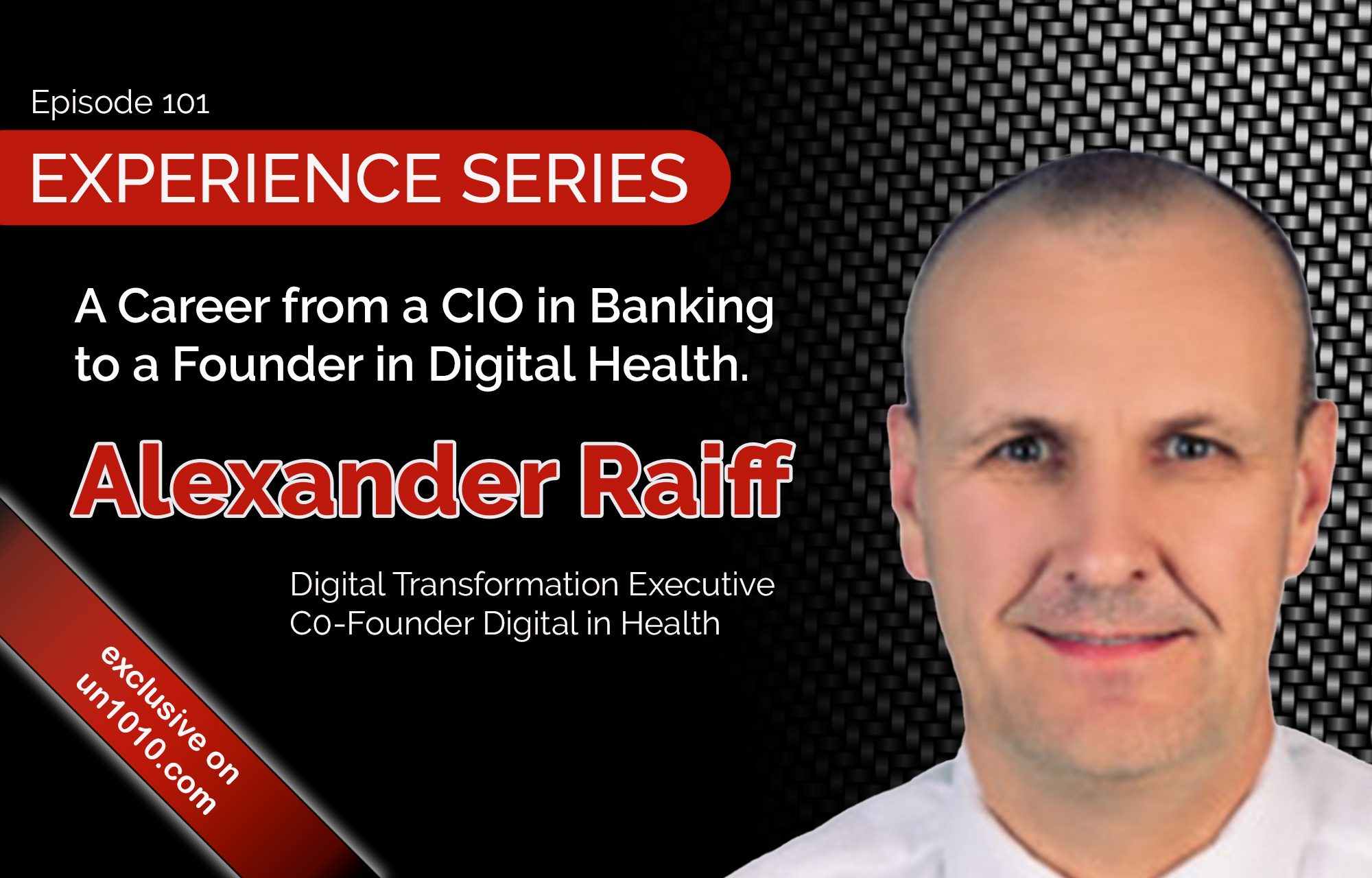
 Udo Neumann