CAPTION
Welcome everybody to the E X P series here at UN 10 10 dot com For allnew listeners in our E X P series we share leadership and career experiences from successful leaders aroundthe world So E X P stands for experience My name is Udon Newman I'm thefounder and chief experience officer at UN 10 10 dot com And in today's episode which has the titlea career from AC I N banking to a founder in Digital Health I welcomea good friend of mine Alexandra Reiff Alexander was the cio and global head of technology foryears in different banks in the United Arab Emirates and is now the founder of Digital HealthSo what makes Alex very unique is his energy and passion to transform business models and organizations He did thatin Europe in Asia and in the Middle East And I'm looking forward to hear from himhow he did that What are his challenges and what were opportunities around his career in these different kindof regions of the world So welcome Alex and thank you for being my guest It'sgreat to have you on the E X P series and I'm sure our listeners will also geta lot of positive feedback out of your experience Thank you And let's get in itHi Thanks for inviting me to be part of your podcast and happy to sharesome insights experience knowledge uh from my past and from my presence and looking forward to a fewchallenging questions from you Let's get into the question Alex Um Your career is a trip fromStuttgart to Beijing to Abu Dhabi and to Dubai And these are only uh some some top names ofcities They were for sure more around that So a lot of people me included have international careersBut I must say yours is a special selection of countries and challenges And I remember some ofyour career steps when we work closely together but please for our listeners share your bio and more importantwhere your decision points on your career are and what are the different challenging milestones on your careerpath You mentioned a few of my stations as you said where I have beenand it's you've mainly focused out around the locations I'll try and extend that abit And before I go into my bio the locations were only one part usuallythe other part was always the location the culture the business culture in that location And then thecompany the company culture of the company that I was working for in these locationsAnd I think that's uh was very often for me decision points um where I where I tookthe decision to move somewhere Now very often I got offered something uh sometimes I declined sometimes I acceptedBut before going also into the bayou you said what are your drivers and decision points For me I thinkthe main thing that always drives me and that's probably not the same for everybody But for meI put that even on my linkedin profile as a quote from Albert Einstein which says I'm neither veryclever nor especially gifted I'm only very very curious and a similar thing is for me rightI I was never good at school I was just average everywhere Um I'm not very gifted in anythingThe only thing I have is a drive and a curiosity I always want toknow more things want to learn different things want to expand my knowledge my experience And then usually whena decision point came or when something came um it was either an offer that came from somewhereand then I had to decide you know in the current position or in the current assignment Am I stillprogressing Am I still satisfying my curiosity or am I not Or do I agreewith the direction that was basically brought to me Uh Can I identify myself with that or notAnd then usually you start to rethink and uh you you start to rethink whether you knowis it still the progress I want to make is it the direction I want to go toAnd that's kind of always the decision points and the drivers and that has never changed over the last manyyears going back into um bio or where does all of that come from orhow did I end up doing that I mean originally I studied electrical engineering in Germany Graduated as a master'sin what was at that time what do you call digital at that time which waskind of the technical part of computer science And that went down to really you know switching switching flipflops and um basically programming F GPA S and all that stuff really the the hardcore bitof computer science and all of that was in the last millennium So at the very earlystages of this whole thing now after graduating and after basically being in the job umbeing uh taken over by the company for whom I did my final thesis I realized that you knowdeveloping hardware and writing low level software was interesting but was not going to cutit for me for the whole life So I went back to university and did kindof the German equivalent of an M B A which we call engineer I did halfof that in Germany And as I thought you know there must be something else I did half ofthat in Singapore which was kind of my first real international stint And that was quite interesting to be exposedto a different culture to be exposed to also a different educational environment which wasnot what I had experienced so far studying all my time up to a first degree in GermanySo that kind of got me very interested to see Oops there's more out there and there's much moreto learn there's much more to experience and it's not only the content of your job your educationthere's a lot around this which is cultural which is business practices which is different behaviorsAnd I sometimes as I say I somehow as I say I I think I leaked bloodat that point Then once that was finished I basically applied and I signed upwith uh at that point uh Shell trading and shipping or shell the oil company But in their tradingarm which was um and in their actually in their I T which was a good combinationof my electronics I T skills and uh the M B A slash business skillsI had acquired at least theoretically during my university time So I ended up in London at acompany called Shell Trading They were doing the crude and products trading and I was in theI T there Very interesting for me Um first as an I T consultant Then whenthis whole thing again remember we talk about the last millennium when this whole thing withthe web started I was very keen to get into that to understand that And we developed in-housedevelopment In-house developed a few productivity applications stuff you you take for granted today stuff youget off the shelf today with office 3 65 and others But that was quiteinteresting So I did that for quite some time for them And then also did someinfrastructure work for them on the network level understanding how IP networks work and uh basically rollingout messaging projects Um Again very interesting Lots of facets Uh The thing then was Iwas in their trainee program But you know what um there was no real progress anymore andthere was no real projection for me anymore What comes next and where to go next Sosomething happened some old friend called me and said look there's this startup here in Germany they'relooking for somebody to basically help drive the development So I left a very safe job and I left aprescribed career and I jumped into that start up and was doing e-commerce software again very interestingset up there The whole thing the software the whole dream was already sold to a few customers butnothing was really built or not a lot Let me say it this way and uh somebodyhad to get the whole things together that was a very engaged team Um And um a veryalso knowledgeable and very skilled team I just needed to be pulling together a bit of architecture whichI hadn't come across before that but a bit of systems architecture uh how to do these thingsproperly how to do them in a scalable way So we build software and thatwas great So I was there for three years It was running quite well It was a startup I putsome money in Unfortunately you know there was this external event which they called the dot com bubble burstwhich hit us unfortunately before the next f funding round And uh we were not yetcash flow positive We had a good cash flow but we were not yet cash flow positive And that's whenyou get in trouble with the startup Usually uh you're not yet cash flow positive there's not enoughmoney anymore and you need to then do something So we had to restructure the companyIt was a very tough way We had to downsize things were not going necessarily the trajectoryI thought they should be going We built a great software We had quite a few customers We were runningthe biggest e-commerce site in Europe on Microsoft basis But still at the end there came a decisionpoint when um I got an offer from a company called Daimler slash Mercedes from uh whichis when I met UDO basically And that sounded actually interesting And um you know so I had torethink do I want to keep spending my time in the startup environment Um or do I wantto move back into Big Cop and uh and operate there And at that pointI felt I can learn more by moving back into big corporation Um Plus in all fairness Ihad two little kids Uh you know you need to bring the money home inorder to have the food on the table So I switched I switched to Daimler atthat point and was then under UDO responsible for the cluster Central Europe as a as a cluster C AO uh with quite a few with quite a few group companies there running largely vehicle finance on the retailside and also vehicle finance a bit on the corporate side for the deal of financingAnd interesting enough many of them had all the same problems They were engaged in some transformation programs theywere engaged in some uh system migrations and they were largely how should I say tackledonly technically but not organizationally Uh They were very often you know conceptualized purely technically and neglected thewhole organizational piece and how to get how to get such a thing implemented orchanged Uh Because it's the technical part is just one part it's an important part andit needs to be done well but it's not the only part So cut the long story shortI ended up going around the Europe uh trying to basically bring such projects backon track or to run them completely and somehow in some cases I was successful in somecases you couldn't fix them And um that was all very interesting And I kept learning Ikept learning system approaches I kept learning different organizations I kept learning different financial products which I hadnot come across before And as it is my it as it is my kind ofpersonal endeavor I want to know not only how do things work technically but also how do they workUh conceptually So I wanted to learn how does a leasing work How does a loan work Howdoes that get calculated How does that get accounted for How does that get amortized Howand so on and how does that get serviced Uh how do you interact with the customer and withinthis project you know I had lots of um lots of um opportunities to ask people who knowhow this works So that went on for a while then uh somebody realized uh that you could send meinto some burning platforms And the next burning platform was Beijing at that point inuh in China where Daimler Le Mercedes were just building a new financial services company at that pointwhich I think it's become a bank in the meantime and they needed somebody to basically makesure this thing goes live properly and then uh it is operational and can be built out uh withfurther products further systems and so on So we packed the container and went to Beijing with the whole familyThat was interesting completely different culture completely new environment Sure it challenging Yes But you knowwhat I think it was it was great It was a great experience So that went on for abouttwo years Um I was just about to renew my contract for another year because therewas more things to come on that side that the company was growing like mad and umadditional systems for additional products needed to be implemented Uh I enjoyed that very much and thenI got another call saying look um you just have to go over the water into Japan UmThere's a few other there's a few issues with a few of the financial servicecompanies there because there is three and then there is the vehicles import side and the part logisticsside So quite a few things need to be done there Can you please goSo I looked at it like Japan it was never in Japan Don't know that culture really heardlots of things But uh anyway so again packed the container moved the family to Japan was there for threeyears Um doing replacement projects doing refurbishment projects and doing I think still the only demerger of my career uhwhere uh Daimler and Chrysler or Mercedes and Chrysler basically dem Meg very interesting exercise Um If you everget to do one of those again for three years doing system replacements and and architecture overhauls landscape overhauls thereFirst time I did virtualization there Very interesting And with that one got exposed to let me callit what we call cloud today at least on the technology side So that was quite interesting Uh Then Igot called back into Germany to basically take care of a few things One was the home build umcourse system uh that they were running out of Milton Keynes Plus there was a project going on inDetroit Plus moving the financial services headquarter from Berlin to Stuttgart and so on and so forthAnd that was then for me a bit how should I say Awkward I didn'tknow really you know where was this going And and um my boss had changed didn't like that guySo you know then all of a sudden I had hunted ok And and said lookthere is this uh actually it was two things happening at the same time Ihad literally two job offers at the same time which is very rare One was uh to go to Londonand the other one was to go to this weird place called Abu Dhabi uh where there was abank who needed somebody to you know do what I used to do Overhaul the whole thingI then thought you know London I was already uh my son was born there So whynot try something new Let's go to Abu Dhabi So we went to Abu Dhabi That was for meprobably one of the bigger challenges because I was all of a sudden not onlyresponsible for um some part of the banking business but they literally they were a universal bankand they literally had everything that you can think of in banking from retail conventional Islamic over sme to corporatebanking to um to brokerage to wealth management to private banking you name it they had it And um thewhole thing was pretty pretty pretty um underserved on the I T side I should say uhI was really surprised what you can on which footprint you can run a bank So everything neededto be done That was down from the data centers from the networks from the serverlandscape up to the application landscape to the whole application architecture replacing core systems replacing payment systems building outthe channels which were not there before and then basically ramping them up and puttingthem onto a footprint so you can run The whole thing was quite interesting And um that wentactually it took me about six years or so to refurbish that whole shop And just at the momentwhen it would have become boring there was another challenge which was you know three banks merging SoI went into a three bank merger and uh got the task to kind of get thatdone on the I T side which again was a very interesting one Never done the threeway never done such a merger But um then just right in the middle of that everything was designed setup was running was running Well actually at that point there was a personal event in mylife which was my daughter had an offer to basically join the United World College And umwell that would have meant for her a change in the location for her last two years inthe diploma program and she was prepared to go to boarding But at the same time I had afew health issues and I had done this for quite a while And so I thought maybetime for a change maybe time to retire Now I I can probably while Italk about this I can hear UDO laughing in the background Alex and retiring And that was reallymy goal I had to fix a few health issues which I did And together with my daughtermy wife we then went to to Thailand and you know try to recover health wise Plus umenable my daughter to do her to do her to finish her school there And um Ireally wanted to opt out but then obviously as it was still within that merger um somebody needed to youknow finish that So my boss came to me and said you need to find mea solution So basically for the best part of the year I was shuttling back and forthbetween Thailand and Abu Dhabi in order to pull this merger over the line which we then successfully did wemerged the systems and everything worked all well And uh I left then uh like two days orthree days after the final merger and after the final go live of the systemsI boarded the plane flew back to Thailand I think I landed one day thenext day the airport was locked for over a year due to COVID So I was Iwas stranded in Thailand which was actually quite nice you know I fixed my health issuesand then things started to happen I really wanted to retire but uh didn't pan out like this as itwas COVID and as everybody was kind of and now all of a sudden accepting remoteworking um I got quite a few people who called me who were aware that this guy Alex hasnothing to do Um So I got lots of things Can you have a look atthis one Can you please check out that one Can you whatever you know lots ofand or I even went into some consulting engagements because nobody wanted you on site anyway atthat point in time So I did a lot of stuff remote and that's how allof this started I got into some um some startups who were asking for advice So Iand some of them were so interesting that I decided I want to even put some moneyinto them So I started what you would call angel investment for angel investing forno better word So I started to put money into it put my knowledge into ittry to coach a few of these founders And that became really interesting and um that went on untilkind of COVID was over until my daughter graduated And then we decided that probably Thailand is a bittoo calm So we came back to the UAE um still had an apartment in Dubai movedinto that one And then again things started to happen I was very busy with myum startups on the fintech and red side and on the crypto asset side And all ofa sudden another bank here local bank came and said look we're looking for somebodywho can you know inflict the change of also to say fix up things Um So I started withthem and uh that was also very interesting Again another universal bank lots of projectsin trouble which needed to be on track Um a landscape which needs overhaul a lot ofwork So that was going on while that happened I met um I met an old friend of mine actuallyhe was the first guy I had ever hired and we compared notes and he had some ideas anduh how does that uh came a startup So we we we threw our ideas together we threw our conceptstogether And at the end uh we started a startup we put quite a lot of money inand uh now I'm running a startup I'm still in the bank as a consultant Uh basicallyto help them finish off all the things that I tried to on track and that I started with themthat I needed to finalize But but couldn't because I can't I can't do two fulltime jobs At least not in how I'm engaging usually So I'm still working with them asa consultant And uh on the other side um I have a start up with abunch of uh friends where we're trying to do something completely different And again that's the storyfor now let's see where we're going from here Alex Uh Very interesting uh listening to your story and yeahlet let's move into another topic Um Please share with us some career highlights Thereare highlights in every career whether promotion or changes in a professional environment I know you stepped outof your comfort zone several times and started in completing new environments where you need to learn not onlynew business rule rules but also new cultures So please describe a moment or a decisionin your career that you consider a major success or highlight What was it And uh why didyou select that and share that with us Now what was the um the specialmoment in that decision OK Before I come to moment of decision which was a major success or which Iwould deem a major success I have to go back a bit to how youframed the whole question When you said you know stepping out of your comfort zone and soon and so forth Actually that concept doesn't exist for me Uh there is no comfort zone there'sa boring zone and there is an exciting zone The comfort zone or the boring zone is for me alwayswhen things get repetitive and it's always the same when I'm doing things again and again that I've donebefore there's no excitement in there because I'm not learning anything anymore I'm a change manager andas a change manager you're always looking for change and not for continuing the same thing ina slightly different fashion in order to achieve another 1% efficiency a change manager you know lives andbreathes um change like change Meaning you take something from a stable state via an unstable stateto the next stable state Now um That's why you know whenever something becomes you know repetitive for meor comfortable it's time to find something new So it's exciting again And that goes together with whatI said earlier that I'm always trying to learn I'm always excited about new thingsand I I always I'm always curious to find other things and coming back then to your questionlike when is something successful or what is a major success for me I don'twant to go into individual ones but it was largely around um some turnarounds andwhich was often around either um system implementation ations or about whole transformations You know whenthey go live in a bank that's usually a pretty tricky piece because the bank never stops Andthat means that whenever you're operating you know you can't take the things down you have to changethe engine while the race is running And that is usually pretty complex And usually youknow a few things could potentially go wrong because it's complex and not everybody willknow everything at any point in time that can happen So I think such migrations let mecall it this way largely of core banking systems of payment systems They are what I would consider majorsuccesses or highlights because not only because of the technical life because things going alsobecause of all the excitement around it Because usually if the thing is set up properly and if you're runningit properly you have a very good team spirit You have a team which is basically doing the utmostto get things done and to do them successfully and in quality and in time And that is definitelyone thing when you then go through that with the team and things go live successfully and theythey they they cut over successfully Um because that's a major achievement not only for one person but usuallyfor the team The other thing is that usually in such exercises or very oftenyou have to take very unconventional decisions because normally not everything goes to plan and when not everything goes toplan usually you have to very quickly grapple Ok What's the situation Who can help mein the concept And then you have to take the tough decisions usually very quicklyYou don't have time to mull over it and and uh and do all your academicalresearch over it You have to go by experience by trust to people who knowsome fields that you don't know yourself And then basically um take the decisions veryquickly Um And I think I I draw a lot of energy out of such events and that's why Ialso consider them as as major successes when things are then going live Actually another one whichpeople would usually not associate with success is when uh when things have gone majorly wrong when disasters havestruck and you need to bring things back into into a proper run into a proper control Give anexample I had one event where there was a major actually power failure in a data centerwhich is not supposed to happen And literally the whole bank went down and wehad to bring the thing back up in Um Actually no time because customers were waitingto get served on the channels And as you can assume this is not a very easyexercise because you know when things are down some things are coming back up properly some things don't come backup properly You have to take lots of decisions at all based on experience and basedon a few good people you have around you as as as coworkers and and advisorin in such case and I draw a lot of energy out of such events eventhough they are actually negative events But you know once you solve them once you get thingsback up running um ideally in a very quick time this is for me also uma major highlight um because it shows you that number one you have the ability to basically correlate task andyou have the team to basically help you um to get the right information at the righttime in the right depth in order to make the right decisions And again it's a mixtureof uh knowledge skills experience and people people people teams usually and team spirit um withouta team such things can never be pulled And uh again most of the most of such successes thatI would say are are successes I I I like and I would like to drill on is isall such goal lives or such major fixes after a disaster struck somewhere I know it'sa bit unconventional I know this is not what everybody would think is an exciting moment But uhfor me that's what cuts it usually now uh I don't want to make it too easyfor my guests here Alex So here comes a tough question Which decision in your career was the toughest oneWhy was it tough And for sure we want to know what was the outcome Well which decisionwas the toughest one That's actually very easy to answer There's only one thing coming to mind andthat was the most difficult one and remains the most difficult one that I had to ever decide Um Thatwas actually during the times uh with our ecommerce startup we were actually doing great We were building softwareIt was going well We had uh customers we rolled out Uh we had an excellent team and we wereworking our backsides off right So we're working with the team like day and night over the weekendsto pull things off to build things to get them live and so on So onThat was great Unfortunately there was this uh external event called the dot com Hubble Bust Um And allof a sudden you know funding dried up we were not yet cash flow positive So the companycouldn't fund itself Um because again we still were burning money um rather than earning enough because we're stillin the build phase Um So it was actually all going to plan The thing that was unplannedis that we would not be able to basically match the next funding round and get enough money in umto basically fund us up to profit full profitability So what happens in such case there's two choicesright And by the way that's the easy part of the equation The choice is not tolet the company go bust And uh basically all the people lose their job and all the assets thatwere building or everything that you have done so far was for a toss or do you reduceyour workforce in order to cut cost So the decision was again the easy part of the decision was doesthe whole thing go bust or do we cut half of the workforce out That onewas simple right Because you know rather than letting 100% go you let 50% go the difficult part is whomwill you let go You know and you don't have to take decisions on a personal basis to saylike who can stay who can go whom do we actually need as a skeletongroup to continue the company and to continue the build Um who has families whose hardest hit bythis decision It's not like making one or two nonperformance redundant It's like you will have torelease a few people who have become close friends who have worked with you day andnight through who are part of the team So you rip the team apart Uh You rip the spirit apartUm You release people who you don't want to release because they've done a fabulous job with you and they'veworked with you again day and night through to pull things off Um yeah that is probably the hardestdecision I had to take who are the ones who have to leave who are the ones who canstay and and then basically communicating that to these people And again it's not just like a person a numberyou know a a staff number or something like it it's much easier actually in abig company when there's lots of severance packages and blah blah blah in a smallcompany in a startup that struggles for survival This is a very very very personal story and it's a verysad personal story I hope for all the ones and maybe one of of these guys andgirls here's this Now I hope I've handled it Um ok for everybody even though it was a verynegative decision and it was a cut for quite a lot of people I stillhope that I handled it very humane and personal and explain to everybody as to why and as towhat and again what's the toughest decision Don't wanna go through it again if I canavoid it as I'm helping or guiding uh questions here I would say did youhave a plan for your career Was it all by accident Uh Was it theroles the chop itself or the challenges What motivated you for Always the next step How didyour family um support you in that Because without that it's not not possible And I know frommy own experience this is not always easy for for our wives and our kids moving around the world thatstarts a new challenge and uh family follows So please feel free But uh in a short reflection umtry to bring some main decision and building blocks for our listeners so that they may be prepared whenthey are in front of their decisions OK Um These are quite a few questions allmerged into one Um Now from the overarching topic like development and success and how that that willhappen in my case And what could I potentially recommend to somebody Um First I would try and dissectthe whole thing a bit into let me call it personal development and career development I thinkyou can have a great personal development without ever forwarding your career and vice versa You canuh have an excellent career but not at all developed Personally I think the real storyis um if if you can combine the two um that is the best thing you cando from my perspective Now on the personal development side I can only speak for myself and there's probablydifferent paths for me It was always that curiosity that um eagerness to learn findnew things go into a bit uncharted territory um that kept me going Um And again that's for me I'mnot sure if this is the same for everybody but it definitely helps if you'revery curious and it definitely helps if you uh if you can take the thingsthat you're curious about into your work life and into your um business career I'm alwayssaying also to my kids you don't have to be the fastest one You don't have tobe the best one You don't have to be the brightest one You just haveto be there when the others have given up and then pull the thing to the end now And thathas always worked for me by the way or you pick up things that others couldn't complete It's difficultBut if you're curious and if you try and understand why things fail if you understand why things how thingsshould be done properly If you plan them properly it will always work Uh don't fight losing battles thoughright If you're in a losing battle better get out But if you see that there isa path to success in that battle even though that battle is a hard one always go and fightit till the end And usually if you're successful where others failed that gives you a muchbetter trajectory Also on your career side So that's more the personal side Uh On the career development side forme was there a planned career path Yes and no on the one hand there was always a path forwardThere was always some ideas what I wanted to do where I wanted to go Um So it's alwaysbetter to have a plan and then change it rather than to have no plan and and walk through yourcareer and through your life without a plan Um But um you know things do change circumstances change and whenthey do change you need to act or react or decide not to react Sowas it all by accident No probably also not again I think um well let me go back tomy first interview that I had for my interview that I had in the Assessment Centerfor my first job at at Shell I was actually interviewed by the Shell CA O in Germany And he asked me the usual question where do you want to be in 10years And I thought I want to have your seat in 10 years Obviously I didn't tell him thatI was too shy at that point in time I was not bold enough Uh But I shouldhave actually I should have told him that but I felt this was not appropriate at thetime Was that the plan Uh Actually there was no clear plan how to get there There was no clearplan how to get into a cio seat But you know there was this ambition and I would say themost important thing more than having a plan is what is your ambition and which steps can youtake to get a bit closer towards your ambition So it's again it's not about having a laidout career path for your life for your next 10 2030 years I think that'snot going to work today You know technologies things environments are changing too fast for you to havea mapped out career for your next like two digit years uh timeline Again you should havean ambition you should know where you want to go You should be open whennew things happen And even if you have a clear path for the next five or 10years if new opportunities arise you should be prepared to rethink and at least reevaluate sothat it's it's basically coming back the the jobs that we learned back in universityat least for me or the job I'm doing today didn't exist in that form and shape asI learned it in university Um And I think that applies to all of us especially todaythings um develop faster than we think And um there are going to be jobs in fiveor 10 years that nobody knows about today So you better prepared for that You better prepared tokeep learning on your personal development side Uh On your professional side you better evaluate when thereare opportunities coming in Now opportunities are coming in two flavors from my perspective Oneis let me call it positive opportunities So somebody comes to you and says lookI have this job I have this thing you know would you be interested Never say no Inthe first instance always look at it always talk to people and very important Actually Ilearned that I'd be too late in my career because I thought I would stay in the bigcompanies where I was until you know either a very unexpected opportunity came or until things went sourone way or another What I'm trying to say is never get stuck in your in your a prescribedcorporate career in the big Corp where you are always stay open and always network network networknetwork with people outside keep contact talk to people understand what they are up to It's veryimportant especially for people like me I'm an engineer by trade I would say originally I was probably an introvertvery difficult for me to go out just meet people and and talk about what are they doing businesswise How is this working learning from them and so on But I can only emphasizeit's important It's important It's important Network invest the time the more time you invest themore interesting things will come to you over time again This is not something I metI network with a guy or a person today And tomorrow he comes with ajob to me that's not going to happen But uh networking is a long term game and you have tobe in it for the long run you build networks you liaise with people you understand what they're doingyou try and read up on you know how is this working what they're doing You try and learn fromthem As long as you're always keen in learning networking always works And you know the morenetwork you have the more opportunities will rise for you That's one So that's the positive opportunities And againwhen an opportunity comes never say no in the first place always have a look at it Talk aboutthe details understand what this opportunity is about and then sit back and reflect andsay is that the right thing for me to do at this point in time then youhave negative opportunities You know your job runs sour for whatever reason your boss changesUh your company is an M and A exercise and lays off people Um things are happening you know andnobody is safe from that Now if these things happen I think I can only give you one adviceIf you get kicked in the ass take the impulse forward and run with it anddo something with it Don't get stuck right If these things happen again somebody kicks you in the backside usethe use the moves the movement forward and run with it right And and uh speed up get things donefind something new network even more Go into your contacts find out you know what can be done Whereare other opportunities Don't take the first best be very conscious but also negative changes in yourwork environment can have very positive effects Sometimes you know we all get uh what we call the comfort zoneI would say the boring zone these things do happen And you know some of us get lifted outof that comfort or boring zone by getting kicked and you don't want to be in that position Butwhen it happens you need to be prepared for it and you need to knowhow to deal with it Don't stagnate Uh don't procrastinate always move I think that's what I wouldhave to say in the whole thing Um I can give you many examples but I think that wouldprobably get get us into too long a debate uh for this podcast Know youmentioned one other thing which is uh family and moves international moves and all ofthat actually a very very very important thing and there is no you know recipe one size fits allI think the first thing I've seen people having international careers and having their families back in theold place and then moving around a lot flying around a lot working remotely working in several placeskind of living on the plane very successfully and also with their families very successfully andit has worked out for them I've seen more people who are basically uh where thewhole family always moved And I think in that respect what makes or breaks the one orthe other model is basically your partner If your partner is up for a move your partner is ready tobasically um you know change the environment take the challenge you know build the socialnetworks new in a new place in a different culture There's nothing better like it but it'snot for every relationship So relationships can break over that And you have to take a very consciousdecision when these things get offered You know are you and your and your partnerready for that You think you can live through it or not if not and yourrelationship um is precious don't do it if you think it can work out And again sometimesyou need to plunge in and take the challenge and see that it works out Um Iwould say always do it You know you were talking about kids I mean you have kids yourselfI have kids I think you know we are very often not moving because of our kids I thinkkids take a very positive thing out of moving getting into new environments seeing different thingshaving different experiences going into different schools Um You know being in different places in different cultures My claimis kids will ultimately always benefit from it from it Kids will never never never not benefit from itUm If you basically orchestrate the whole thing right That's why I would always say themost important thing is is your family um stable is your spouse with you in the wholething And um I would say even moves can have and in most cases I have seen had very verypositive effects on families because the cohesion within the family gets much stronger At least in myexperience and many people whom I have seen I would even claim that people who have moved a lotor who have lived their life on the move the divorce rate is probably much lower At least from myobservation I don't have a real stat for that So family for me is alwaysum a very important one and I think it's more positive for most families Again Always as long asyour partner is uh is interested and is ready to do it again Could I give any advice for yourcareer Probably not I could only give you the advice do what you love andwhat you're interested in That's a very important one because without that you will never have a careerand um always be open for new things network keep your eyes open evaluate new things never say noin the first place be very conscious And by the way there's no wrong decisions whenit comes to career moves As long as you take into account all the information that you canget and that you have at the point when you make the decision and you make a rational decisionto move or not to move the decision is always right And in most cases I would sayin all cases I can't remember who coined that term It's a two way door right This is not Ifyou go forward you can't go back you can go forward you can go sidewards Sometimes you also can goback and by the way sometimes it's even worth evaluating a proposal um that somebodymakes you for a new job And if you don't really want to move bring that proposal back toyour old employer what happens to many people from my perspective is that you know they get stuck in thatplace because they're good at what they're doing Now obviously your boss in most cases doesn't wantyou to move then because you know he has a very strong workhorse in his teamWhy would he want that workhorse to leave and go elsewhere Um Not all bosses arelike this Um Many bosses are looking at the career development of their people but manybosses are actually especially if they are not themselves strong in the topic they are managing they are looking tokeep the strong horses in their stable rather than letting them move and letting them and have their own careerSo always keep that in mind and when you get a good offer and you wantto stay maybe bring the offer back to your employer and that this is what I have on thetable Can you do something for me in my current company Sometimes worth doing needs to be taken with apinch of salt It's not working in every company um depending on the company culture but I would claim 70%It can give you a very positive move Um I think yeah that was a long talk for thattopic I I hope I could give some insights at least from my perspective Andagain there's no right and no wrong This is my mantra My way how I've managed things Youmay have a completely different way which may be even more successful than what Ihave done Alex Uh A very important question is what is digital health We all knowwhat health means and how important it is But uh uh interesting to learn fromyou what digital health means You told me you are working on an idea to transform the digital health businessand found a digital health So can you share your passion and what it's all about andhow this idea came to you Um Was it your network who helped in thatarea or how did you start a new venture I know you cannot share everything atthe moment but would love to get a little bit more around digital health So before comingto uh what is digital and health um you asked the question you know how did this come about AgainI have emphasized the importance of network So at some point I met a guy whom I had met Idon't know 25 years back 30 years back and whom I had worked with we had developedinto different directions We were both in I T at the time And I haveum I went deeper and deeper and deeper into the whole finance I T bankingI T topic and he ventured into the health I T topic So we met up wediscussed you know we compared notes and I always thought up to that point that uhyou know banks are very much behind in digital But if you compare banks being inthe stone age or sorry in the iron age or bronze age then you know hospitalsand the health system is probably in the stone age We still wrestling with the dinosaursfrom my perspective So many parallels on how to address things Uh many tools conceptsideas developments that happened uh on the technical side but also on business development sidebased on technical developments had somehow not made it into the health sector Uh They were just not adoptedor never never transformed So we are three founders again one is uh a um health I Tarchitect Let me call it this way Um I'm the old banking I T Finance IT guy and we have one medical health professional who is a um a medical doctor and aprofessor in his field and we thought we can probably do something So what are we doingWhat we are building is we're calling this a vertical business ecosystem uh broad wordUm We think a lot of digital transformation needs to happen in the health sector And from experiencewe had all seen in all our fields that when these digital transformations are happening what's usually happeningis that um people start that from the technical angle I implement a new system and itwill all be better And then you discover oops but with the new system comes new processes or different processesAnd once you overhaul your processes you need to revisit you know what are my products and howdo I want to run my products in the future Plus you get new technical opportunities to do thingscompletely different So your products may be coming which were physical products before may now become service products or theymay even become completely virtual products like API based products And there is a whole transformation there And mostof what I've seen in my career was always coming from the technical angle from replacingsystemss And again in the recent let's say 1 1.5 decades the technology space has churnedout so many new concepts that you can't apply to business concepts to processes to productsBut ultimately it's only successful people adopted So at the end it's about the people andpeople meaning it's the professionals as well as your customers Now everybody talks customer journeyone way or another to be very fair Many things I have seen so far indifferent industries are not customer journeys they are product journeys or product service journeys or producton boarding or sales journeys um rarely real customer journeys Um And again same applies basically for the professionals workingin a field if especially if that field is highly knowledge skills and and work intensive and and and peopleintensive So what we thought is that we need to address the transformation of thewhole health space from the people angle in the first instance from the professionals So we're building a platform basicallywhere um people can be trained can share knowledge can acquire knowledge can pursue career opportunities and we willserve Corporates the Corporates where these people are working usually also help their in their staffing needs in their acquisitionof expertise in their general procurement and so on and so forth The field is very wide So farwe've built an M V P a minimal viable product and we now need to basically refundthe company to be ready for the launch and for the operations because that will cost us a bitof money Uh So far we've invested all our own capital all our own work Now we need to basicallybroaden that a bit And once we have um the investment in then we willlaunch hopefully soon and that's what we're working towards And after that I can also disclosea bit more how things are working Exactly and how we are doing So as I said the question I'masking myself is basically um you know what are the important topics on my bucket list Because my bucketlist keeps growing You know I never have enough time to do everything that Iwould love to do and that I would like to do and that I thinkneeds to be done So you have to have a selection mechanism My selection mechanism is always likewhich are the important topics There's always some urgent topics and very often they get imposed onyou by somebody else or something some outside um influence now Never let something urgentBasically bog you down on something important because if something important becomes urgent you're in trouble So try andget the important things done properly and early and try and get the urgent things eitherthan yourself or you outsource them or you buy a service to get them done or do them quickly asas much as you can and never lose sight of the really important ones because these are theones that determine your career your future your personal life And I'm always asking myselfwhen I go through my bucket list do I have to do all of those And whichones are the important Ones the important ones I think I must tackle and ideallyimportant tackle them before they become urgent but at least some wisdom I'm following So Alex herecomes now the question with a little bit uh a challenge around the timing Youhave exactly 60 seconds to answer most of the things which come to your mind But at least five MI CS so called five most important career advices So what are your five mostimportant career advices for all the listeners out there Get your mind ready and 54321 go Ok Numberone do what you're interested in and stay curious and learn There's nothing better than managing a field thatyou understand to the largest extent Number two whatever you do do it properly to the bestof your knowledge to the best of your ability Number three network network network stayin touch with people liaise with people understand what they're doing how they are ticking andkeep exchanging ideas for them Number four be open Look at opportunities if they present themselves don't say no immediatelyeven if you're comfortable in the job even if you like your job always evaluate what's being broughtto you and then take the decision Number five If you get kicked If youget kicked out of a job if things don't go well take the forward impulse and move don't bestagnant Number six you don't have to be the fastest The best the brightest you just have tobe there when the others have flunked out have failed or have given up and you can carryit out to the end Um The last one number seven work in a team getfeedback solicit feedback honest feedback because the boss is not always right and there's always something tobe learned from feedback Alex Thank you so much for making the time for thisinterview I really enjoyed it and learned a lot of new things Thank you Also for sharing yourexperience openly with our listeners This is all about what the E X P series isreally a lot of valuable learning and you opened a big box with great personal career adviceThank you for that I wish you all the best with digital health And let me knowif you need an advisor who helps and overcomes some challenges You have my contact detailsNo question about it Uh I see you either in Dubai or somewhere else in the world havea great trip back home and uh see you soon Bye Thanks We will definitely stayin touch about digital health and about other things that we're doing And um to everybody who has listened tothis podcast until this point One other word of advice from my side you know listen to asmany opinions as you can get listen to how people have mastered their careers theirtrajectory their their personal development But at the end you know digest it digest it thinkabout it and then create your own way Usually no two ways are the same No two problemsare the same and no two solutions are the same So you have to learn digestand then basically make your own solution out of it At least that would be my advice Thank
CAPTION TRANSLATED TO
ENGLISH LANGUAGE
Welcome everybody to the E X P series here at UN 10 10 dot com For allnew listeners in our E X P series we share leadership and career experiences from successful leaders aroundthe world So E X P stands for experience My name is Udon Newman I'm thefounder and chief experience officer at UN 10 10 dot com And in today's episode which has the titlea career from AC I N banking to a founder in Digital Health I welcomea good friend of mine Alexandra Reiff Alexander was the cio and global head of technology foryears in different banks in the United Arab Emirates and is now the founder of Digital HealthSo what makes Alex very unique is his energy and passion to transform business models and organizations He did thatin Europe in Asia and in the Middle East And I'm looking forward to hear from himhow he did that What are his challenges and what were opportunities around his career in these different kindof regions of the world So welcome Alex and thank you for being my guest It'sgreat to have you on the E X P series and I'm sure our listeners will also geta lot of positive feedback out of your experience Thank you And let's get in itHi Thanks for inviting me to be part of your podcast and happy to sharesome insights experience knowledge uh from my past and from my presence and looking forward to a fewchallenging questions from you Let's get into the question Alex Um Your career is a trip fromStuttgart to Beijing to Abu Dhabi and to Dubai And these are only uh some some top names ofcities They were for sure more around that So a lot of people me included have international careersBut I must say yours is a special selection of countries and challenges And I remember some ofyour career steps when we work closely together but please for our listeners share your bio and more importantwhere your decision points on your career are and what are the different challenging milestones on your careerpath You mentioned a few of my stations as you said where I have beenand it's you've mainly focused out around the locations I'll try and extend that abit And before I go into my bio the locations were only one part usuallythe other part was always the location the culture the business culture in that location And then thecompany the company culture of the company that I was working for in these locationsAnd I think that's uh was very often for me decision points um where I where I tookthe decision to move somewhere Now very often I got offered something uh sometimes I declined sometimes I acceptedBut before going also into the bayou you said what are your drivers and decision points For me I thinkthe main thing that always drives me and that's probably not the same for everybody But for meI put that even on my linkedin profile as a quote from Albert Einstein which says I'm neither veryclever nor especially gifted I'm only very very curious and a similar thing is for me rightI I was never good at school I was just average everywhere Um I'm not very gifted in anythingThe only thing I have is a drive and a curiosity I always want toknow more things want to learn different things want to expand my knowledge my experience And then usually whena decision point came or when something came um it was either an offer that came from somewhereand then I had to decide you know in the current position or in the current assignment Am I stillprogressing Am I still satisfying my curiosity or am I not Or do I agreewith the direction that was basically brought to me Uh Can I identify myself with that or notAnd then usually you start to rethink and uh you you start to rethink whether you knowis it still the progress I want to make is it the direction I want to go toAnd that's kind of always the decision points and the drivers and that has never changed over the last manyyears going back into um bio or where does all of that come from orhow did I end up doing that I mean originally I studied electrical engineering in Germany Graduated as a master'sin what was at that time what do you call digital at that time which waskind of the technical part of computer science And that went down to really you know switching switching flipflops and um basically programming F GPA S and all that stuff really the the hardcore bitof computer science and all of that was in the last millennium So at the very earlystages of this whole thing now after graduating and after basically being in the job umbeing uh taken over by the company for whom I did my final thesis I realized that you knowdeveloping hardware and writing low level software was interesting but was not going to cutit for me for the whole life So I went back to university and did kindof the German equivalent of an M B A which we call engineer I did halfof that in Germany And as I thought you know there must be something else I did half ofthat in Singapore which was kind of my first real international stint And that was quite interesting to be exposedto a different culture to be exposed to also a different educational environment which wasnot what I had experienced so far studying all my time up to a first degree in GermanySo that kind of got me very interested to see Oops there's more out there and there's much moreto learn there's much more to experience and it's not only the content of your job your educationthere's a lot around this which is cultural which is business practices which is different behaviorsAnd I sometimes as I say I somehow as I say I I think I leaked bloodat that point Then once that was finished I basically applied and I signed upwith uh at that point uh Shell trading and shipping or shell the oil company But in their tradingarm which was um and in their actually in their I T which was a good combinationof my electronics I T skills and uh the M B A slash business skillsI had acquired at least theoretically during my university time So I ended up in London at acompany called Shell Trading They were doing the crude and products trading and I was in theI T there Very interesting for me Um first as an I T consultant Then whenthis whole thing again remember we talk about the last millennium when this whole thing withthe web started I was very keen to get into that to understand that And we developed in-housedevelopment In-house developed a few productivity applications stuff you you take for granted today stuff youget off the shelf today with office 3 65 and others But that was quiteinteresting So I did that for quite some time for them And then also did someinfrastructure work for them on the network level understanding how IP networks work and uh basically rollingout messaging projects Um Again very interesting Lots of facets Uh The thing then was Iwas in their trainee program But you know what um there was no real progress anymore andthere was no real projection for me anymore What comes next and where to go next Sosomething happened some old friend called me and said look there's this startup here in Germany they'relooking for somebody to basically help drive the development So I left a very safe job and I left aprescribed career and I jumped into that start up and was doing e-commerce software again very interestingset up there The whole thing the software the whole dream was already sold to a few customers butnothing was really built or not a lot Let me say it this way and uh somebodyhad to get the whole things together that was a very engaged team Um And um a veryalso knowledgeable and very skilled team I just needed to be pulling together a bit of architecture whichI hadn't come across before that but a bit of systems architecture uh how to do these thingsproperly how to do them in a scalable way So we build software and thatwas great So I was there for three years It was running quite well It was a startup I putsome money in Unfortunately you know there was this external event which they called the dot com bubble burstwhich hit us unfortunately before the next f funding round And uh we were not yetcash flow positive We had a good cash flow but we were not yet cash flow positive And that's whenyou get in trouble with the startup Usually uh you're not yet cash flow positive there's not enoughmoney anymore and you need to then do something So we had to restructure the companyIt was a very tough way We had to downsize things were not going necessarily the trajectoryI thought they should be going We built a great software We had quite a few customers We were runningthe biggest e-commerce site in Europe on Microsoft basis But still at the end there came a decisionpoint when um I got an offer from a company called Daimler slash Mercedes from uh whichis when I met UDO basically And that sounded actually interesting And um you know so I had torethink do I want to keep spending my time in the startup environment Um or do I wantto move back into Big Cop and uh and operate there And at that pointI felt I can learn more by moving back into big corporation Um Plus in all fairness Ihad two little kids Uh you know you need to bring the money home inorder to have the food on the table So I switched I switched to Daimler atthat point and was then under UDO responsible for the cluster Central Europe as a as a cluster C AO uh with quite a few with quite a few group companies there running largely vehicle finance on the retailside and also vehicle finance a bit on the corporate side for the deal of financingAnd interesting enough many of them had all the same problems They were engaged in some transformation programs theywere engaged in some uh system migrations and they were largely how should I say tackledonly technically but not organizationally Uh They were very often you know conceptualized purely technically and neglected thewhole organizational piece and how to get how to get such a thing implemented orchanged Uh Because it's the technical part is just one part it's an important part andit needs to be done well but it's not the only part So cut the long story shortI ended up going around the Europe uh trying to basically bring such projects backon track or to run them completely and somehow in some cases I was successful in somecases you couldn't fix them And um that was all very interesting And I kept learning Ikept learning system approaches I kept learning different organizations I kept learning different financial products which I hadnot come across before And as it is my it as it is my kind ofpersonal endeavor I want to know not only how do things work technically but also how do they workUh conceptually So I wanted to learn how does a leasing work How does a loan work Howdoes that get calculated How does that get accounted for How does that get amortized Howand so on and how does that get serviced Uh how do you interact with the customer and withinthis project you know I had lots of um lots of um opportunities to ask people who knowhow this works So that went on for a while then uh somebody realized uh that you could send meinto some burning platforms And the next burning platform was Beijing at that point inuh in China where Daimler Le Mercedes were just building a new financial services company at that pointwhich I think it's become a bank in the meantime and they needed somebody to basically makesure this thing goes live properly and then uh it is operational and can be built out uh withfurther products further systems and so on So we packed the container and went to Beijing with the whole familyThat was interesting completely different culture completely new environment Sure it challenging Yes But you knowwhat I think it was it was great It was a great experience So that went on for abouttwo years Um I was just about to renew my contract for another year because therewas more things to come on that side that the company was growing like mad and umadditional systems for additional products needed to be implemented Uh I enjoyed that very much and thenI got another call saying look um you just have to go over the water into Japan UmThere's a few other there's a few issues with a few of the financial servicecompanies there because there is three and then there is the vehicles import side and the part logisticsside So quite a few things need to be done there Can you please goSo I looked at it like Japan it was never in Japan Don't know that culture really heardlots of things But uh anyway so again packed the container moved the family to Japan was there for threeyears Um doing replacement projects doing refurbishment projects and doing I think still the only demerger of my career uhwhere uh Daimler and Chrysler or Mercedes and Chrysler basically dem Meg very interesting exercise Um If you everget to do one of those again for three years doing system replacements and and architecture overhauls landscape overhauls thereFirst time I did virtualization there Very interesting And with that one got exposed to let me callit what we call cloud today at least on the technology side So that was quite interesting Uh Then Igot called back into Germany to basically take care of a few things One was the home build umcourse system uh that they were running out of Milton Keynes Plus there was a project going on inDetroit Plus moving the financial services headquarter from Berlin to Stuttgart and so on and so forthAnd that was then for me a bit how should I say Awkward I didn'tknow really you know where was this going And and um my boss had changed didn't like that guySo you know then all of a sudden I had hunted ok And and said lookthere is this uh actually it was two things happening at the same time Ihad literally two job offers at the same time which is very rare One was uh to go to Londonand the other one was to go to this weird place called Abu Dhabi uh where there was abank who needed somebody to you know do what I used to do Overhaul the whole thingI then thought you know London I was already uh my son was born there So whynot try something new Let's go to Abu Dhabi So we went to Abu Dhabi That was for meprobably one of the bigger challenges because I was all of a sudden not onlyresponsible for um some part of the banking business but they literally they were a universal bankand they literally had everything that you can think of in banking from retail conventional Islamic over sme to corporatebanking to um to brokerage to wealth management to private banking you name it they had it And um thewhole thing was pretty pretty pretty um underserved on the I T side I should say uhI was really surprised what you can on which footprint you can run a bank So everything neededto be done That was down from the data centers from the networks from the serverlandscape up to the application landscape to the whole application architecture replacing core systems replacing payment systems building outthe channels which were not there before and then basically ramping them up and puttingthem onto a footprint so you can run The whole thing was quite interesting And um that wentactually it took me about six years or so to refurbish that whole shop And just at the momentwhen it would have become boring there was another challenge which was you know three banks merging SoI went into a three bank merger and uh got the task to kind of get thatdone on the I T side which again was a very interesting one Never done the threeway never done such a merger But um then just right in the middle of that everything was designed setup was running was running Well actually at that point there was a personal event in mylife which was my daughter had an offer to basically join the United World College And umwell that would have meant for her a change in the location for her last two years inthe diploma program and she was prepared to go to boarding But at the same time I had afew health issues and I had done this for quite a while And so I thought maybetime for a change maybe time to retire Now I I can probably while Italk about this I can hear UDO laughing in the background Alex and retiring And that was reallymy goal I had to fix a few health issues which I did And together with my daughtermy wife we then went to to Thailand and you know try to recover health wise Plus umenable my daughter to do her to do her to finish her school there And um Ireally wanted to opt out but then obviously as it was still within that merger um somebody needed to youknow finish that So my boss came to me and said you need to find mea solution So basically for the best part of the year I was shuttling back and forthbetween Thailand and Abu Dhabi in order to pull this merger over the line which we then successfully did wemerged the systems and everything worked all well And uh I left then uh like two days orthree days after the final merger and after the final go live of the systemsI boarded the plane flew back to Thailand I think I landed one day thenext day the airport was locked for over a year due to COVID So I was Iwas stranded in Thailand which was actually quite nice you know I fixed my health issuesand then things started to happen I really wanted to retire but uh didn't pan out like this as itwas COVID and as everybody was kind of and now all of a sudden accepting remoteworking um I got quite a few people who called me who were aware that this guy Alex hasnothing to do Um So I got lots of things Can you have a look atthis one Can you please check out that one Can you whatever you know lots ofand or I even went into some consulting engagements because nobody wanted you on site anyway atthat point in time So I did a lot of stuff remote and that's how allof this started I got into some um some startups who were asking for advice So Iand some of them were so interesting that I decided I want to even put some moneyinto them So I started what you would call angel investment for angel investing forno better word So I started to put money into it put my knowledge into ittry to coach a few of these founders And that became really interesting and um that went on untilkind of COVID was over until my daughter graduated And then we decided that probably Thailand is a bittoo calm So we came back to the UAE um still had an apartment in Dubai movedinto that one And then again things started to happen I was very busy with myum startups on the fintech and red side and on the crypto asset side And all ofa sudden another bank here local bank came and said look we're looking for somebodywho can you know inflict the change of also to say fix up things Um So I started withthem and uh that was also very interesting Again another universal bank lots of projectsin trouble which needed to be on track Um a landscape which needs overhaul a lot ofwork So that was going on while that happened I met um I met an old friend of mine actuallyhe was the first guy I had ever hired and we compared notes and he had some ideas anduh how does that uh came a startup So we we we threw our ideas together we threw our conceptstogether And at the end uh we started a startup we put quite a lot of money inand uh now I'm running a startup I'm still in the bank as a consultant Uh basicallyto help them finish off all the things that I tried to on track and that I started with themthat I needed to finalize But but couldn't because I can't I can't do two fulltime jobs At least not in how I'm engaging usually So I'm still working with them asa consultant And uh on the other side um I have a start up with abunch of uh friends where we're trying to do something completely different And again that's the storyfor now let's see where we're going from here Alex Uh Very interesting uh listening to your story and yeahlet let's move into another topic Um Please share with us some career highlights Thereare highlights in every career whether promotion or changes in a professional environment I know you stepped outof your comfort zone several times and started in completing new environments where you need to learn not onlynew business rule rules but also new cultures So please describe a moment or a decisionin your career that you consider a major success or highlight What was it And uh why didyou select that and share that with us Now what was the um the specialmoment in that decision OK Before I come to moment of decision which was a major success or which Iwould deem a major success I have to go back a bit to how youframed the whole question When you said you know stepping out of your comfort zone and soon and so forth Actually that concept doesn't exist for me Uh there is no comfort zone there'sa boring zone and there is an exciting zone The comfort zone or the boring zone is for me alwayswhen things get repetitive and it's always the same when I'm doing things again and again that I've donebefore there's no excitement in there because I'm not learning anything anymore I'm a change manager andas a change manager you're always looking for change and not for continuing the same thing ina slightly different fashion in order to achieve another 1% efficiency a change manager you know lives andbreathes um change like change Meaning you take something from a stable state via an unstable stateto the next stable state Now um That's why you know whenever something becomes you know repetitive for meor comfortable it's time to find something new So it's exciting again And that goes together with whatI said earlier that I'm always trying to learn I'm always excited about new thingsand I I always I'm always curious to find other things and coming back then to your questionlike when is something successful or what is a major success for me I don'twant to go into individual ones but it was largely around um some turnarounds andwhich was often around either um system implementation ations or about whole transformations You know whenthey go live in a bank that's usually a pretty tricky piece because the bank never stops Andthat means that whenever you're operating you know you can't take the things down you have to changethe engine while the race is running And that is usually pretty complex And usually youknow a few things could potentially go wrong because it's complex and not everybody willknow everything at any point in time that can happen So I think such migrations let mecall it this way largely of core banking systems of payment systems They are what I would consider majorsuccesses or highlights because not only because of the technical life because things going alsobecause of all the excitement around it Because usually if the thing is set up properly and if you're runningit properly you have a very good team spirit You have a team which is basically doing the utmostto get things done and to do them successfully and in quality and in time And that is definitelyone thing when you then go through that with the team and things go live successfully and theythey they they cut over successfully Um because that's a major achievement not only for one person but usuallyfor the team The other thing is that usually in such exercises or very oftenyou have to take very unconventional decisions because normally not everything goes to plan and when not everything goes toplan usually you have to very quickly grapple Ok What's the situation Who can help mein the concept And then you have to take the tough decisions usually very quicklyYou don't have time to mull over it and and uh and do all your academicalresearch over it You have to go by experience by trust to people who knowsome fields that you don't know yourself And then basically um take the decisions veryquickly Um And I think I I draw a lot of energy out of such events and that's why Ialso consider them as as major successes when things are then going live Actually another one whichpeople would usually not associate with success is when uh when things have gone majorly wrong when disasters havestruck and you need to bring things back into into a proper run into a proper control Give anexample I had one event where there was a major actually power failure in a data centerwhich is not supposed to happen And literally the whole bank went down and wehad to bring the thing back up in Um Actually no time because customers were waitingto get served on the channels And as you can assume this is not a very easyexercise because you know when things are down some things are coming back up properly some things don't come backup properly You have to take lots of decisions at all based on experience and basedon a few good people you have around you as as as coworkers and and advisorin in such case and I draw a lot of energy out of such events eventhough they are actually negative events But you know once you solve them once you get thingsback up running um ideally in a very quick time this is for me also uma major highlight um because it shows you that number one you have the ability to basically correlate task andyou have the team to basically help you um to get the right information at the righttime in the right depth in order to make the right decisions And again it's a mixtureof uh knowledge skills experience and people people people teams usually and team spirit um withouta team such things can never be pulled And uh again most of the most of such successes thatI would say are are successes I I I like and I would like to drill on is isall such goal lives or such major fixes after a disaster struck somewhere I know it'sa bit unconventional I know this is not what everybody would think is an exciting moment But uhfor me that's what cuts it usually now uh I don't want to make it too easyfor my guests here Alex So here comes a tough question Which decision in your career was the toughest oneWhy was it tough And for sure we want to know what was the outcome Well which decisionwas the toughest one That's actually very easy to answer There's only one thing coming to mind andthat was the most difficult one and remains the most difficult one that I had to ever decide Um Thatwas actually during the times uh with our ecommerce startup we were actually doing great We were building softwareIt was going well We had uh customers we rolled out Uh we had an excellent team and we wereworking our backsides off right So we're working with the team like day and night over the weekendsto pull things off to build things to get them live and so on So onThat was great Unfortunately there was this uh external event called the dot com Hubble Bust Um And allof a sudden you know funding dried up we were not yet cash flow positive So the companycouldn't fund itself Um because again we still were burning money um rather than earning enough because we're stillin the build phase Um So it was actually all going to plan The thing that was unplannedis that we would not be able to basically match the next funding round and get enough money in umto basically fund us up to profit full profitability So what happens in such case there's two choicesright And by the way that's the easy part of the equation The choice is not tolet the company go bust And uh basically all the people lose their job and all the assets thatwere building or everything that you have done so far was for a toss or do you reduceyour workforce in order to cut cost So the decision was again the easy part of the decision was doesthe whole thing go bust or do we cut half of the workforce out That onewas simple right Because you know rather than letting 100% go you let 50% go the difficult part is whomwill you let go You know and you don't have to take decisions on a personal basis to saylike who can stay who can go whom do we actually need as a skeletongroup to continue the company and to continue the build Um who has families whose hardest hit bythis decision It's not like making one or two nonperformance redundant It's like you will have torelease a few people who have become close friends who have worked with you day andnight through who are part of the team So you rip the team apart Uh You rip the spirit apartUm You release people who you don't want to release because they've done a fabulous job with you and they'veworked with you again day and night through to pull things off Um yeah that is probably the hardestdecision I had to take who are the ones who have to leave who are the ones who canstay and and then basically communicating that to these people And again it's not just like a person a numberyou know a a staff number or something like it it's much easier actually in abig company when there's lots of severance packages and blah blah blah in a smallcompany in a startup that struggles for survival This is a very very very personal story and it's a verysad personal story I hope for all the ones and maybe one of of these guys andgirls here's this Now I hope I've handled it Um ok for everybody even though it was a verynegative decision and it was a cut for quite a lot of people I stillhope that I handled it very humane and personal and explain to everybody as to why and as towhat and again what's the toughest decision Don't wanna go through it again if I canavoid it as I'm helping or guiding uh questions here I would say did youhave a plan for your career Was it all by accident Uh Was it theroles the chop itself or the challenges What motivated you for Always the next step How didyour family um support you in that Because without that it's not not possible And I know frommy own experience this is not always easy for for our wives and our kids moving around the world thatstarts a new challenge and uh family follows So please feel free But uh in a short reflection umtry to bring some main decision and building blocks for our listeners so that they may be prepared whenthey are in front of their decisions OK Um These are quite a few questions allmerged into one Um Now from the overarching topic like development and success and how that that willhappen in my case And what could I potentially recommend to somebody Um First I would try and dissectthe whole thing a bit into let me call it personal development and career development I thinkyou can have a great personal development without ever forwarding your career and vice versa You canuh have an excellent career but not at all developed Personally I think the real storyis um if if you can combine the two um that is the best thing you cando from my perspective Now on the personal development side I can only speak for myself and there's probablydifferent paths for me It was always that curiosity that um eagerness to learn findnew things go into a bit uncharted territory um that kept me going Um And again that's for me I'mnot sure if this is the same for everybody but it definitely helps if you'revery curious and it definitely helps if you uh if you can take the thingsthat you're curious about into your work life and into your um business career I'm alwayssaying also to my kids you don't have to be the fastest one You don't have tobe the best one You don't have to be the brightest one You just haveto be there when the others have given up and then pull the thing to the end now And thathas always worked for me by the way or you pick up things that others couldn't complete It's difficultBut if you're curious and if you try and understand why things fail if you understand why things how thingsshould be done properly If you plan them properly it will always work Uh don't fight losing battles thoughright If you're in a losing battle better get out But if you see that there isa path to success in that battle even though that battle is a hard one always go and fightit till the end And usually if you're successful where others failed that gives you a muchbetter trajectory Also on your career side So that's more the personal side Uh On the career development side forme was there a planned career path Yes and no on the one hand there was always a path forwardThere was always some ideas what I wanted to do where I wanted to go Um So it's alwaysbetter to have a plan and then change it rather than to have no plan and and walk through yourcareer and through your life without a plan Um But um you know things do change circumstances change and whenthey do change you need to act or react or decide not to react Sowas it all by accident No probably also not again I think um well let me go back tomy first interview that I had for my interview that I had in the Assessment Centerfor my first job at at Shell I was actually interviewed by the Shell CA O in Germany And he asked me the usual question where do you want to be in 10years And I thought I want to have your seat in 10 years Obviously I didn't tell him thatI was too shy at that point in time I was not bold enough Uh But I shouldhave actually I should have told him that but I felt this was not appropriate at thetime Was that the plan Uh Actually there was no clear plan how to get there There was no clearplan how to get into a cio seat But you know there was this ambition and I would say themost important thing more than having a plan is what is your ambition and which steps can youtake to get a bit closer towards your ambition So it's again it's not about having a laidout career path for your life for your next 10 2030 years I think that'snot going to work today You know technologies things environments are changing too fast for you to havea mapped out career for your next like two digit years uh timeline Again you should havean ambition you should know where you want to go You should be open whennew things happen And even if you have a clear path for the next five or 10years if new opportunities arise you should be prepared to rethink and at least reevaluate sothat it's it's basically coming back the the jobs that we learned back in universityat least for me or the job I'm doing today didn't exist in that form and shape asI learned it in university Um And I think that applies to all of us especially todaythings um develop faster than we think And um there are going to be jobs in fiveor 10 years that nobody knows about today So you better prepared for that You better prepared tokeep learning on your personal development side Uh On your professional side you better evaluate when thereare opportunities coming in Now opportunities are coming in two flavors from my perspective Oneis let me call it positive opportunities So somebody comes to you and says lookI have this job I have this thing you know would you be interested Never say no Inthe first instance always look at it always talk to people and very important Actually Ilearned that I'd be too late in my career because I thought I would stay in the bigcompanies where I was until you know either a very unexpected opportunity came or until things went sourone way or another What I'm trying to say is never get stuck in your in your a prescribedcorporate career in the big Corp where you are always stay open and always network network networknetwork with people outside keep contact talk to people understand what they are up to It's veryimportant especially for people like me I'm an engineer by trade I would say originally I was probably an introvertvery difficult for me to go out just meet people and and talk about what are they doing businesswise How is this working learning from them and so on But I can only emphasizeit's important It's important It's important Network invest the time the more time you invest themore interesting things will come to you over time again This is not something I metI network with a guy or a person today And tomorrow he comes with ajob to me that's not going to happen But uh networking is a long term game and you have tobe in it for the long run you build networks you liaise with people you understand what they're doingyou try and read up on you know how is this working what they're doing You try and learn fromthem As long as you're always keen in learning networking always works And you know the morenetwork you have the more opportunities will rise for you That's one So that's the positive opportunities And againwhen an opportunity comes never say no in the first place always have a look at it Talk aboutthe details understand what this opportunity is about and then sit back and reflect andsay is that the right thing for me to do at this point in time then youhave negative opportunities You know your job runs sour for whatever reason your boss changesUh your company is an M and A exercise and lays off people Um things are happening you know andnobody is safe from that Now if these things happen I think I can only give you one adviceIf you get kicked in the ass take the impulse forward and run with it anddo something with it Don't get stuck right If these things happen again somebody kicks you in the backside usethe use the moves the movement forward and run with it right And and uh speed up get things donefind something new network even more Go into your contacts find out you know what can be done Whereare other opportunities Don't take the first best be very conscious but also negative changes in yourwork environment can have very positive effects Sometimes you know we all get uh what we call the comfort zoneI would say the boring zone these things do happen And you know some of us get lifted outof that comfort or boring zone by getting kicked and you don't want to be in that position Butwhen it happens you need to be prepared for it and you need to knowhow to deal with it Don't stagnate Uh don't procrastinate always move I think that's what I wouldhave to say in the whole thing Um I can give you many examples but I think that wouldprobably get get us into too long a debate uh for this podcast Know youmentioned one other thing which is uh family and moves international moves and all ofthat actually a very very very important thing and there is no you know recipe one size fits allI think the first thing I've seen people having international careers and having their families back in theold place and then moving around a lot flying around a lot working remotely working in several placeskind of living on the plane very successfully and also with their families very successfully andit has worked out for them I've seen more people who are basically uh where thewhole family always moved And I think in that respect what makes or breaks the one orthe other model is basically your partner If your partner is up for a move your partner is ready tobasically um you know change the environment take the challenge you know build the socialnetworks new in a new place in a different culture There's nothing better like it but it'snot for every relationship So relationships can break over that And you have to take a very consciousdecision when these things get offered You know are you and your and your partnerready for that You think you can live through it or not if not and yourrelationship um is precious don't do it if you think it can work out And again sometimesyou need to plunge in and take the challenge and see that it works out Um Iwould say always do it You know you were talking about kids I mean you have kids yourselfI have kids I think you know we are very often not moving because of our kids I thinkkids take a very positive thing out of moving getting into new environments seeing different thingshaving different experiences going into different schools Um You know being in different places in different cultures My claimis kids will ultimately always benefit from it from it Kids will never never never not benefit from itUm If you basically orchestrate the whole thing right That's why I would always say themost important thing is is your family um stable is your spouse with you in the wholething And um I would say even moves can have and in most cases I have seen had very verypositive effects on families because the cohesion within the family gets much stronger At least in myexperience and many people whom I have seen I would even claim that people who have moved a lotor who have lived their life on the move the divorce rate is probably much lower At least from myobservation I don't have a real stat for that So family for me is alwaysum a very important one and I think it's more positive for most families Again Always as long asyour partner is uh is interested and is ready to do it again Could I give any advice for yourcareer Probably not I could only give you the advice do what you love andwhat you're interested in That's a very important one because without that you will never have a careerand um always be open for new things network keep your eyes open evaluate new things never say noin the first place be very conscious And by the way there's no wrong decisions whenit comes to career moves As long as you take into account all the information that you canget and that you have at the point when you make the decision and you make a rational decisionto move or not to move the decision is always right And in most cases I would sayin all cases I can't remember who coined that term It's a two way door right This is not Ifyou go forward you can't go back you can go forward you can go sidewards Sometimes you also can goback and by the way sometimes it's even worth evaluating a proposal um that somebodymakes you for a new job And if you don't really want to move bring that proposal back toyour old employer what happens to many people from my perspective is that you know they get stuck in thatplace because they're good at what they're doing Now obviously your boss in most cases doesn't wantyou to move then because you know he has a very strong workhorse in his teamWhy would he want that workhorse to leave and go elsewhere Um Not all bosses arelike this Um Many bosses are looking at the career development of their people but manybosses are actually especially if they are not themselves strong in the topic they are managing they are looking tokeep the strong horses in their stable rather than letting them move and letting them and have their own careerSo always keep that in mind and when you get a good offer and you wantto stay maybe bring the offer back to your employer and that this is what I have on thetable Can you do something for me in my current company Sometimes worth doing needs to be taken with apinch of salt It's not working in every company um depending on the company culture but I would claim 70%It can give you a very positive move Um I think yeah that was a long talk for thattopic I I hope I could give some insights at least from my perspective Andagain there's no right and no wrong This is my mantra My way how I've managed things Youmay have a completely different way which may be even more successful than what Ihave done Alex Uh A very important question is what is digital health We all knowwhat health means and how important it is But uh uh interesting to learn fromyou what digital health means You told me you are working on an idea to transform the digital health businessand found a digital health So can you share your passion and what it's all about andhow this idea came to you Um Was it your network who helped in thatarea or how did you start a new venture I know you cannot share everything atthe moment but would love to get a little bit more around digital health So before comingto uh what is digital and health um you asked the question you know how did this come about AgainI have emphasized the importance of network So at some point I met a guy whom I had met Idon't know 25 years back 30 years back and whom I had worked with we had developedinto different directions We were both in I T at the time And I haveum I went deeper and deeper and deeper into the whole finance I T bankingI T topic and he ventured into the health I T topic So we met up wediscussed you know we compared notes and I always thought up to that point that uhyou know banks are very much behind in digital But if you compare banks being inthe stone age or sorry in the iron age or bronze age then you know hospitalsand the health system is probably in the stone age We still wrestling with the dinosaursfrom my perspective So many parallels on how to address things Uh many tools conceptsideas developments that happened uh on the technical side but also on business development sidebased on technical developments had somehow not made it into the health sector Uh They were just not adoptedor never never transformed So we are three founders again one is uh a um health I Tarchitect Let me call it this way Um I'm the old banking I T Finance IT guy and we have one medical health professional who is a um a medical doctor and aprofessor in his field and we thought we can probably do something So what are we doingWhat we are building is we're calling this a vertical business ecosystem uh broad wordUm We think a lot of digital transformation needs to happen in the health sector And from experiencewe had all seen in all our fields that when these digital transformations are happening what's usually happeningis that um people start that from the technical angle I implement a new system and itwill all be better And then you discover oops but with the new system comes new processes or different processesAnd once you overhaul your processes you need to revisit you know what are my products and howdo I want to run my products in the future Plus you get new technical opportunities to do thingscompletely different So your products may be coming which were physical products before may now become service products or theymay even become completely virtual products like API based products And there is a whole transformation there And mostof what I've seen in my career was always coming from the technical angle from replacingsystemss And again in the recent let's say 1 1.5 decades the technology space has churnedout so many new concepts that you can't apply to business concepts to processes to productsBut ultimately it's only successful people adopted So at the end it's about the people andpeople meaning it's the professionals as well as your customers Now everybody talks customer journeyone way or another to be very fair Many things I have seen so far indifferent industries are not customer journeys they are product journeys or product service journeys or producton boarding or sales journeys um rarely real customer journeys Um And again same applies basically for the professionals workingin a field if especially if that field is highly knowledge skills and and work intensive and and and peopleintensive So what we thought is that we need to address the transformation of thewhole health space from the people angle in the first instance from the professionals So we're building a platform basicallywhere um people can be trained can share knowledge can acquire knowledge can pursue career opportunities and we willserve Corporates the Corporates where these people are working usually also help their in their staffing needs in their acquisitionof expertise in their general procurement and so on and so forth The field is very wide So farwe've built an M V P a minimal viable product and we now need to basically refundthe company to be ready for the launch and for the operations because that will cost us a bitof money Uh So far we've invested all our own capital all our own work Now we need to basicallybroaden that a bit And once we have um the investment in then we willlaunch hopefully soon and that's what we're working towards And after that I can also disclosea bit more how things are working Exactly and how we are doing So as I said the question I'masking myself is basically um you know what are the important topics on my bucket list Because my bucketlist keeps growing You know I never have enough time to do everything that Iwould love to do and that I would like to do and that I thinkneeds to be done So you have to have a selection mechanism My selection mechanism is always likewhich are the important topics There's always some urgent topics and very often they get imposed onyou by somebody else or something some outside um influence now Never let something urgentBasically bog you down on something important because if something important becomes urgent you're in trouble So try andget the important things done properly and early and try and get the urgent things eitherthan yourself or you outsource them or you buy a service to get them done or do them quickly asas much as you can and never lose sight of the really important ones because these are theones that determine your career your future your personal life And I'm always asking myselfwhen I go through my bucket list do I have to do all of those And whichones are the important Ones the important ones I think I must tackle and ideallyimportant tackle them before they become urgent but at least some wisdom I'm following So Alex herecomes now the question with a little bit uh a challenge around the timing Youhave exactly 60 seconds to answer most of the things which come to your mind But at least five MI CS so called five most important career advices So what are your five mostimportant career advices for all the listeners out there Get your mind ready and 54321 go Ok Numberone do what you're interested in and stay curious and learn There's nothing better than managing a field thatyou understand to the largest extent Number two whatever you do do it properly to the bestof your knowledge to the best of your ability Number three network network network stayin touch with people liaise with people understand what they're doing how they are ticking andkeep exchanging ideas for them Number four be open Look at opportunities if they present themselves don't say no immediatelyeven if you're comfortable in the job even if you like your job always evaluate what's being broughtto you and then take the decision Number five If you get kicked If youget kicked out of a job if things don't go well take the forward impulse and move don't bestagnant Number six you don't have to be the fastest The best the brightest you just have tobe there when the others have flunked out have failed or have given up and you can carryit out to the end Um The last one number seven work in a team getfeedback solicit feedback honest feedback because the boss is not always right and there's always something tobe learned from feedback Alex Thank you so much for making the time for thisinterview I really enjoyed it and learned a lot of new things Thank you Also for sharing yourexperience openly with our listeners This is all about what the E X P series isreally a lot of valuable learning and you opened a big box with great personal career adviceThank you for that I wish you all the best with digital health And let me knowif you need an advisor who helps and overcomes some challenges You have my contact detailsNo question about it Uh I see you either in Dubai or somewhere else in the world havea great trip back home and uh see you soon Bye Thanks We will definitely stayin touch about digital health and about other things that we're doing And um to everybody who has listened tothis podcast until this point One other word of advice from my side you know listen to asmany opinions as you can get listen to how people have mastered their careers theirtrajectory their their personal development But at the end you know digest it digest it thinkabout it and then create your own way Usually no two ways are the same No two problemsare the same and no two solutions are the same So you have to learn digestand then basically make your own solution out of it At least that would be my advice Thank


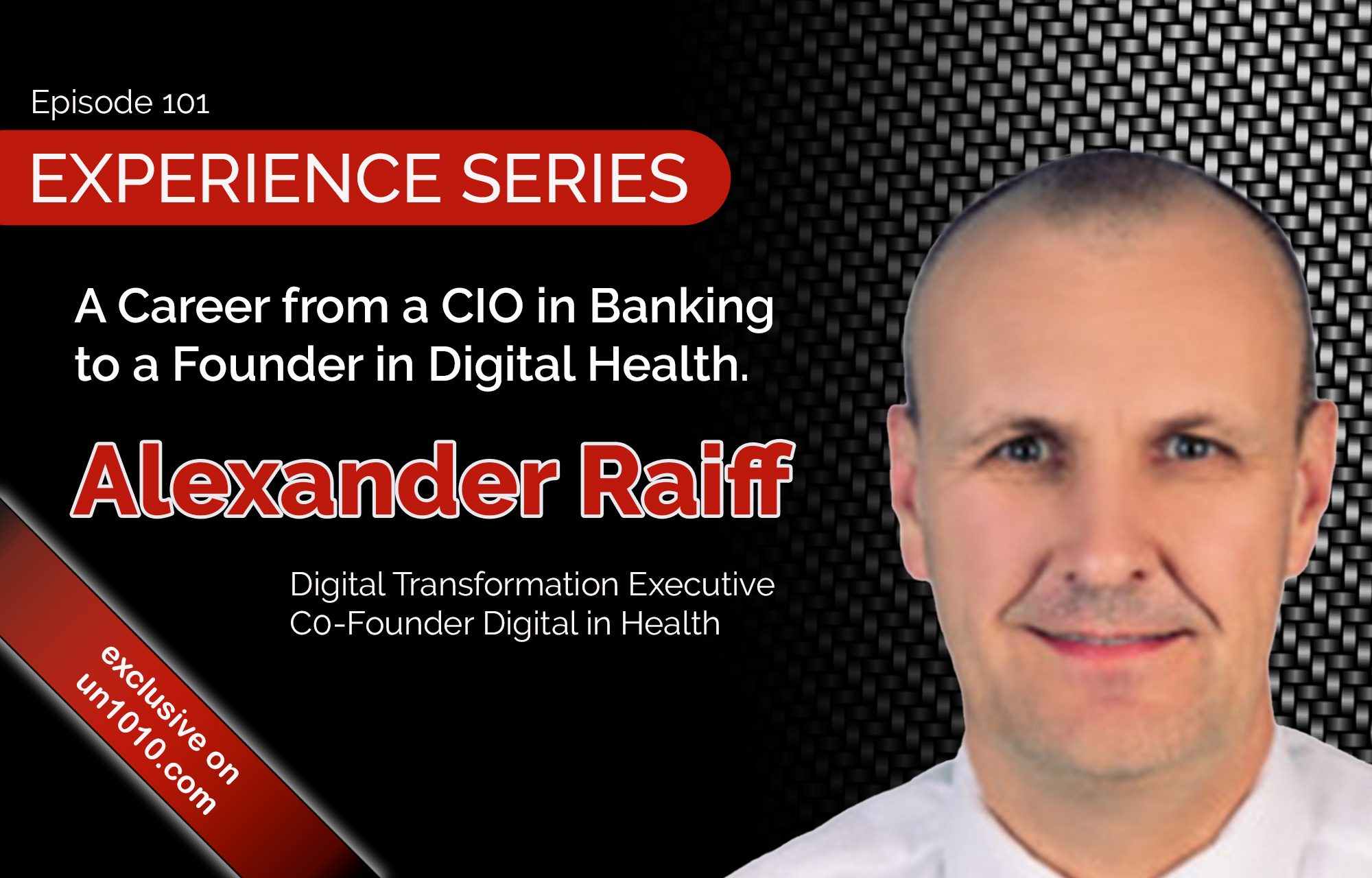
 Udo Neumann